Celebration of the 25th anniversary of the Piedmont Project

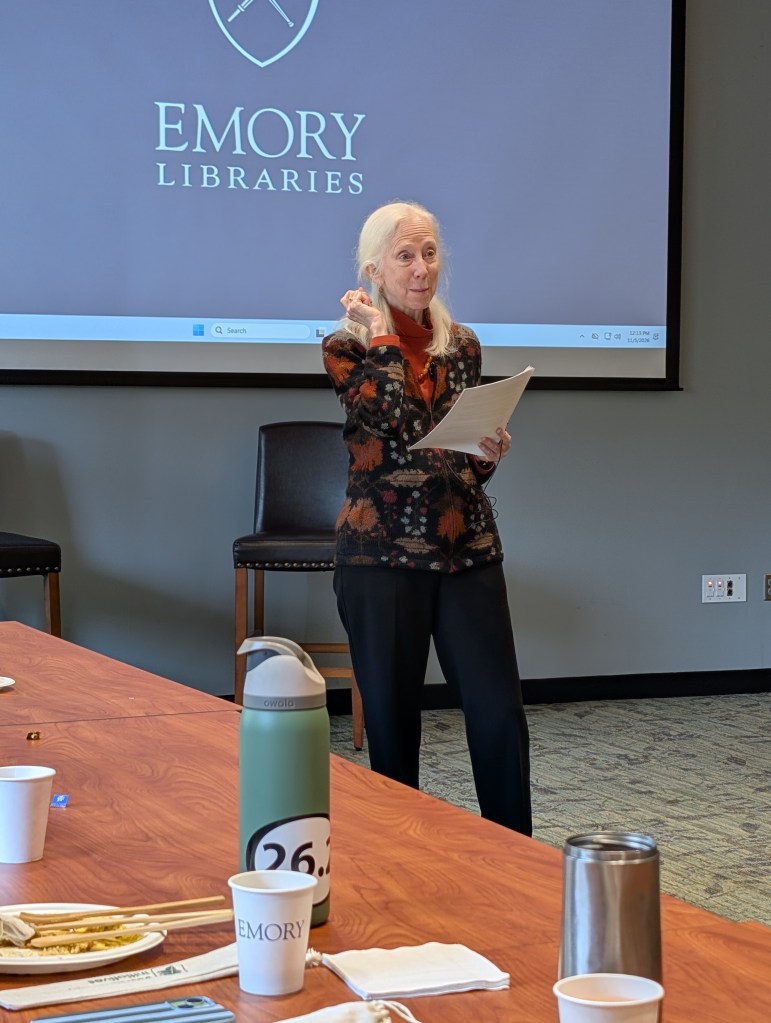
Dr. Peggy Barlett, Goodrich C. White Emeritus Professor of Anthropology, is a leader of sustainability in higher education nationally, particularly of the effort to integrate sustainability into faculty curricula and research across disciplines. She published Sustainability on Campus with Geoff Chase in 2004 and Sustainability in Higher Education, also with Geoff, in 2013, which have shaped the strategies and cultures of hundreds of higher education institutions across the globe. Peggy helped elevate this work and gave it and the people undertaking it legitimacy and significance.

In addition to writing seminal work on sustainability in higher education, Peggy and Geoff Chase partnered on workshops for faculty from all over the country to learn methods for inspiring faculty to integrate sustainability into their curricula and research.  Today, we celebrate the 25th anniversary of Emory’s Piedmont Project, founded by Peggy.  It is the longest running faculty development program in the country, both to integrate sustainability into the curriculum and research at Emory but also on any topic nationally.

Peggy’s impact at Emory is evident in every realm of campus sustainability life. Peggy chaired the Ad Hoc Committee on the Environment, co-chaired both the first and second sustainability visioning committees, led the Sustainable Food Committee and Sustainability Faculty Advisory Council, and served as Faculty Liaison to the Office of Sustainability Initiatives for 13 years.  The first Sustainability Vision led to the Oxford Organic Farm, Emory’s Farmers Market, the Emory Educational Garden Project, and the annual Sustainability Food Fair.  Peggy also strongly advocated for and led the founding of the Sustainability Minor , which continues to provide students in the College a course of study in sustainability in addition to their varied majors.  Peggy was awarded the inaugural Lifetime Achievement Award by the Association for the Advancement of Sustainability in Higher Education and an Honorary Degree in 2023 from her undergraduate alma mater Grinnell College along with many other awards and accolades. 
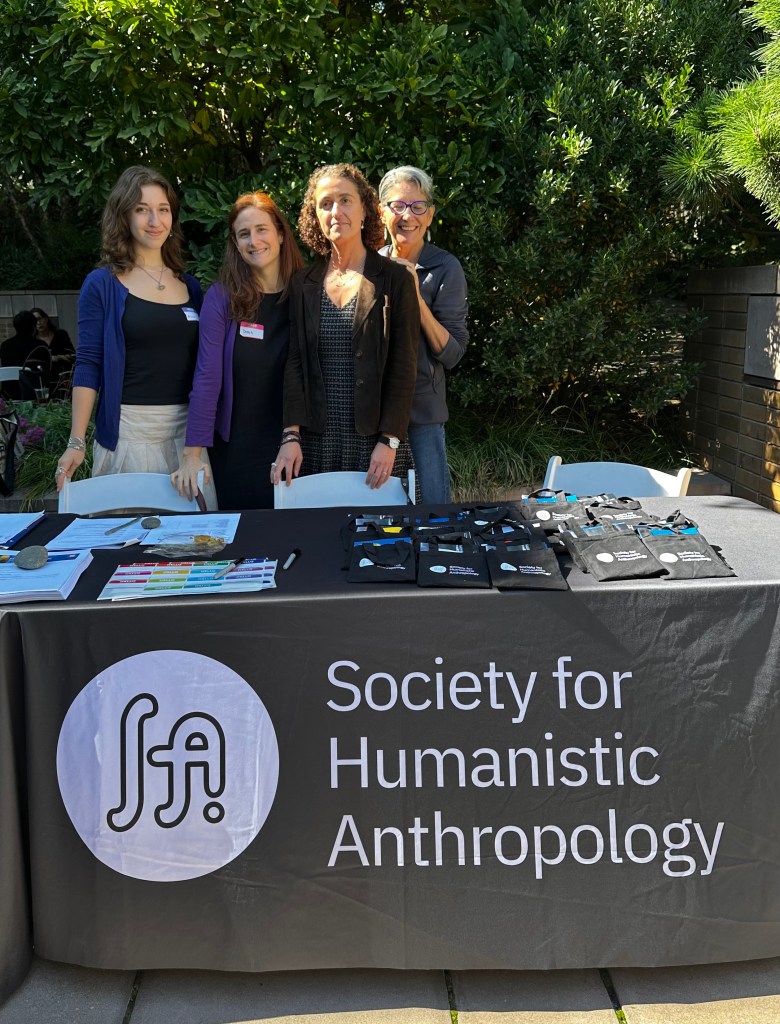
Choosing Each Other: Multimodal Ethnographies of Friendship as Community Care

Emory Anthropology faculty Debra Vidali and Anthropology undergraduate Alice Stern (C ‘28) were selected to open the annual Society for Humanistic Anthropology (SHA) Fall Conference on Oct 2, 2026 with an immersive performance-based experience, based on Vidali’s research in ethnographic theater-making. In addition, Emory Anthropology PhD alumnae, Joanna Davidson (LGS ’07) and Dinah Hannaford (LGS ‘14), were selected to close the conference, with a roundtable on the ethics and enduring resonances of fieldwork friendships.

The SHA conference theme was “Choosing Each Other: Multimodal Ethnographies of Friendship as Community Care.” The program is here.

From the SHA Conference program chair, Amina Tawasil:  

We begin the conference on Friday at 12:30 PM and open with an immersive roundtable that sets the affective and embodied tone for the entire weekend. Debra Vidali (Emory University), joined by Ash Marinaccio (Docbloc), Jules Downum (Understory), and Alice Stern (Emory University), brings together a multigenerational group of anthropologists, choreographers, dancers, and theater directors to explore how processes of theater-making and performance creation build communities of friendship, connection, and care. This session may transform into a participatory experience, inviting attendees into rehearsal exercises that activate relations of connection and care firsthand. It is a fitting way to step into two days together.

We close Saturday afternoon with a roundtable that poses a critical question at the heart of ethnographic practice. Joanna Davidson (Boston University), alongside Dinah Hannaford (University of Houston), Yana Stainova (McMaster University), and Ellen Foley (Clark University), asks why the friendships that sustain our long-term fieldwork so often remain absent from our published pages. Drawing on enduring relationships forged in West Africa and Latin America, the presenters scrutinize the ethics, trepidation, and expressive limitations that have kept these vital bonds off the page, and they ask whether multimodal ethnography might offer more conducive possibilities.

Bruce Knauft recipient of the 2026-2027 Heilbrun Distinguished Emeritus Fellowship

Heilbrun Fellowships are funded by a generous contribution from the family of Professor of Psychology Emeritus Alfred B. Heilbrun Jr. Open to emeriti faculty in the Arts and Sciences, these fellowships carry a stipend of $10,000 and provide an opportunity to continue research and scholarship in retirement. https://emeritus.emory.edu/programs/research-fellowships.html

How to Secure Philanthropic Funding in a Competitive Environment

A collaborative project of Kristin Phillips, Emory Anthropology, and Jola Ajibade, Emory Environmental Sciences, mentioned in recent Nature article as a great example of interdisciplinary research.

“Bringing together researchers from different disciplines leads to much more interesting and innovative scholarship.”

“Organizing around interdisciplinary problem spaces is one of the things foundations can often do better than can government funders whose funding structures are often set up along disciplinary lines.”

https://www.nature.com/articles/d41586-026-01198-0

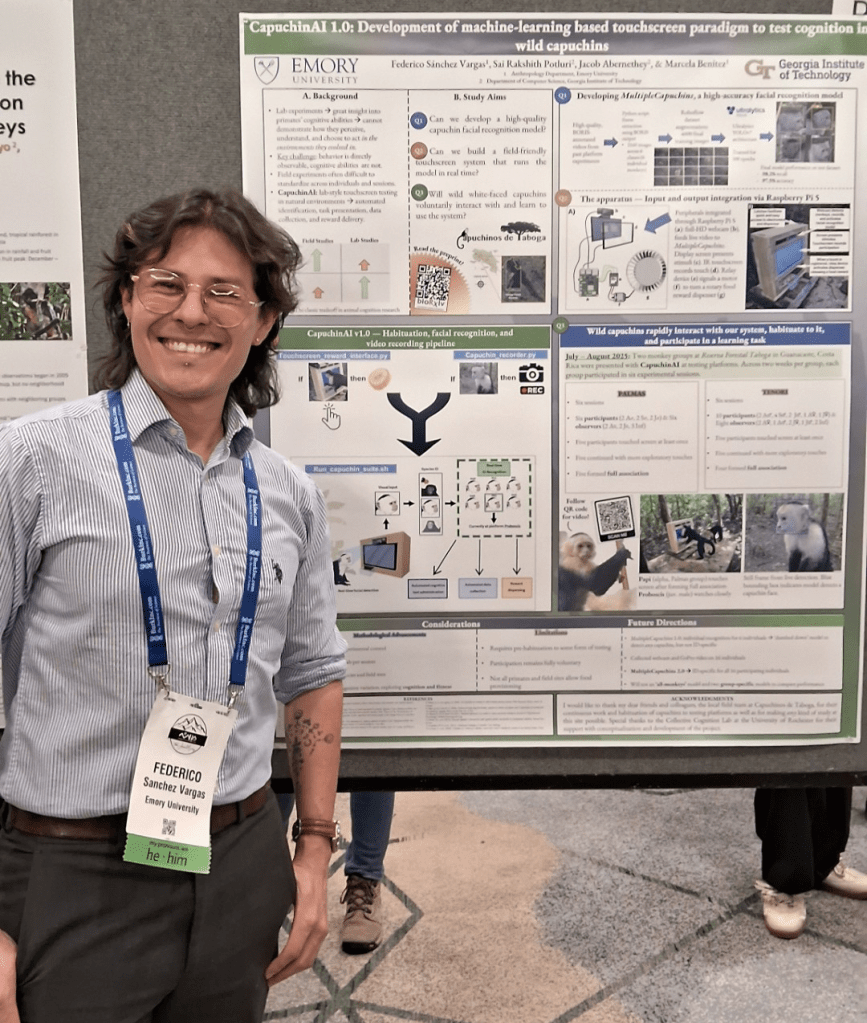
Federico Sánchez Vargas wins AABA conference award

Anthropology graduate student Federico Sánchez Vargas has won the Outstanding Student Presentation Award for his poster on CapuchinAI at the 2026 American Association of Biological Anthropologist conference in Denver. The AABA has long recognized the important contributions made to our discipline by students. Their work reflects the promise and future of our field. This award recognizes the important contributions students make to the field and celebrates innovative, rigorous research by emerging scholars.

Congratulations, Fede!

$1 million Sloan grant funds deep look at data center boom in U.S. South

Emory faculty Kristin Phillips (left), associate professor of anthropology, and Jola Ajibade, associate professor of environmental sciences, are co-investigators on a three-year project to study the impact of the rapid growth of data centers.

— Photos courtesy of Philips and Ajibade.

The massive data centers needed to run AI systems are rapidly altering geographical landscapes and communities. That’s especially true in the U.S. South, where many states are dominated by large, investor-owned utilities and land and other natural resources are still relatively available.

“Data centers are proliferating alongside the explosive growth of cloud computing and AI technologies,” says Kristin Phillips, associate professor of anthropology at Emory University. “People are raising concerns about who is reaping the benefits of these facilities and who is bearing the economic and environmental costs.”

Phillips, a sociocultural anthropologist who studies the social context of energy and infrastructure, is digging deeply into these questions and their implications for the U.S. South, funded by a $1 million grant from the Alfred P. Sloan Foundation. 

Her co-principal investigators on the grant are Jola Ajibade, Emory associate professor of environmental sciences, and Gabe Schwartzman, assistant professor of geography and sustainability at the University of Tennessee, Knoxville.

Cathy Kunkel, from the Institute for Energy Economics and Financial Analysis, and Nikki Luke, a human geographer at the University of Tennessee, Knoxville, will serve as consultants to the co-investigators.

The three-year project will research the current and potential effects of data centers on electricity costs for individual ratepayers, structural changes to how energy is supplied and consumed, and issues of environmental and social justice. The researchers will conduct case studies for three states: Georgia, Virginia and Tennessee.

They will combine qualitative and quantitative methods, drawing data from interviews, surveys, official documents, cost analyses, focus groups and ethnography to consider the perspectives of utilities, state and local officials, workers, community organizations and residents.

Existing and planned data center sites will be mapped and made available online. These maps will be overlaid with demographic data on the surrounding communities.

The researchers will also develop a comparative analysis of the regulatory and policy landscapes across the three states to identify best practices. The different stakeholders will be actively engaged in all aspects of the work, from project scoping to implementing research plans and disseminating the results.

Dr. Peter Little Receives URC Award!

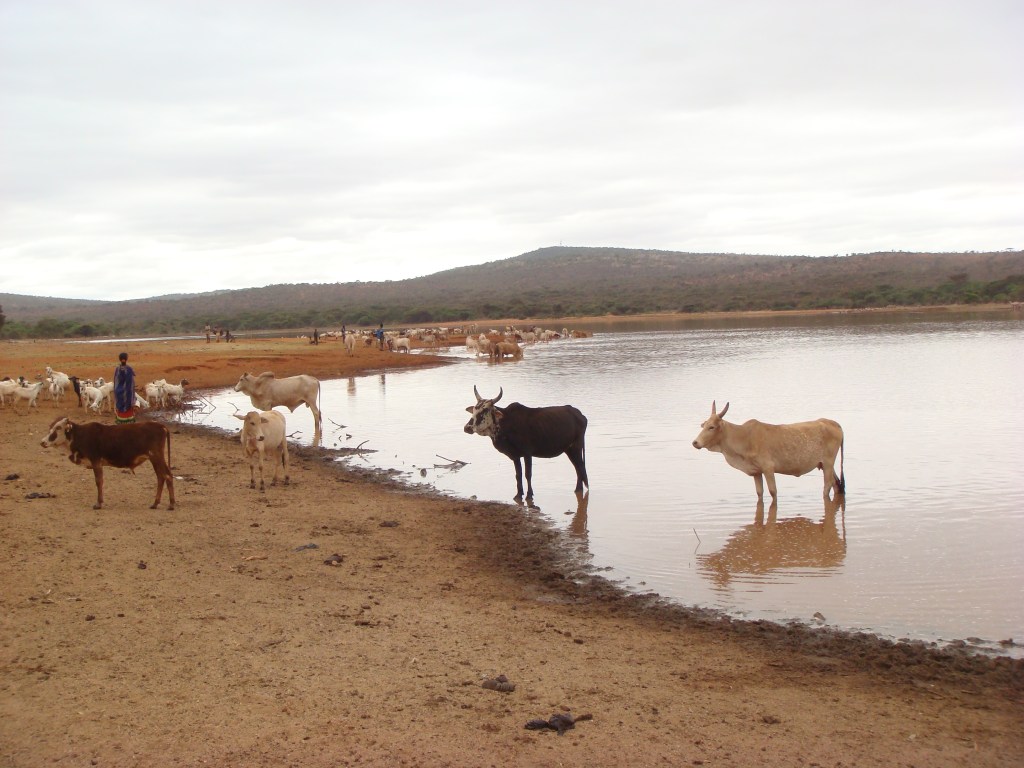
The University Research Committee (URC) has awarded the research team of Dr. David Civitello, Associate Professor of Biology (Principal Investigator) and Dr. Peter Little, Samuel C. Dobbs Professor of Anthropology (Co-Investigator), a $40,000 Interdisciplinary – URC-Halle Institute Global Research Award for their project Linking Movement Patterns of Ranging Livestock Herds in Mwanza, Tanzania to Transmission Potential of Human Schistosomes.  

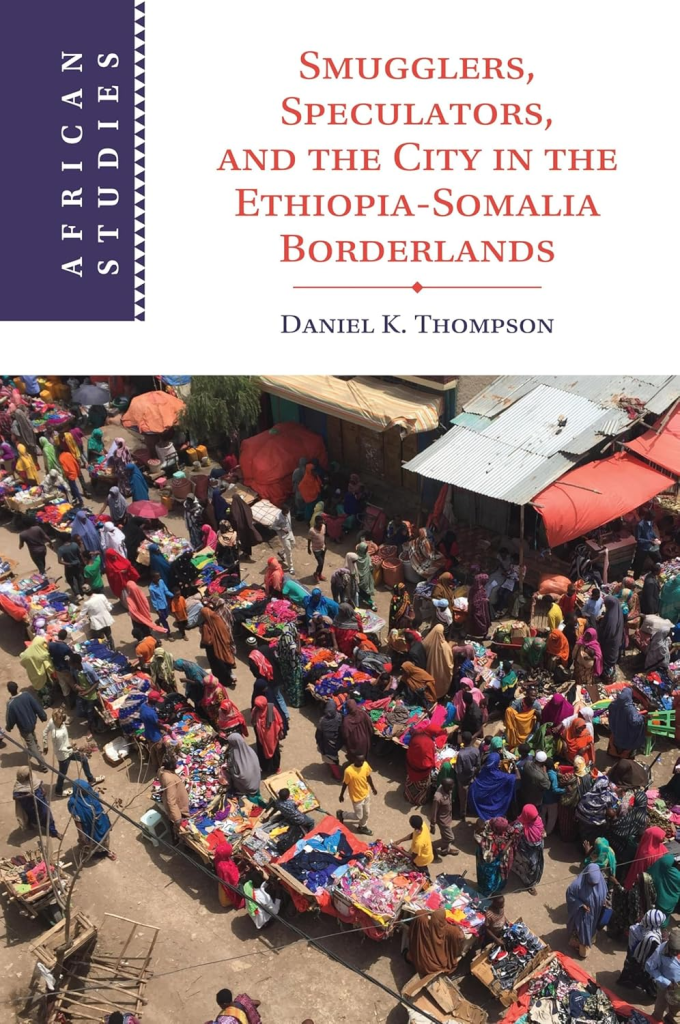
Anthropology Alumni Daniel Thompson publishes book: Smugglers, Speculators, and the City in the Ethiopia-Somalia Borderlands

Emory University and Anthropology Alumni Daniel K. Thompson publishes book titled Smugglers, Speculators, and the City in the Ethiopia-Somalia Borderlands.

Daniel graduated from Emory University with his PhD in 2019 and is now an Assistant Professor of Anthropology at the University of California, Merced. His research focused on exploring eastern African and US migration, border-making and how urbanization shaped economic strategies for handling uncertainty.

First page excerpt: “For a century, the Ethiopian city Jigjiga was known as a dusty hub of cross-border smuggling and a hotbed of rebellion on Ethiopia’s eastern frontier. After 2010, it transformed into a post-conflict boomtown, becoming one of Africa’s fastest-growing cities and attracting Somali return-migrants from across the globe. This study examines Jigjiga’s astonishing transformation through the eyes of its cross-border traders, urban businesspeople, and officials. Daniel K. Thompson follows traders and return-migrants across borders to where their lives collide in the city. Analysing their strategies of mobility and exchange, this study reveals how Ethiopia’s federal politics, Euro-American concerns about terrorism, and local business aspirations have intertwined to reshape links between border-making and city-making in the Horn of Africa. To understand this distinctive brand of urbanism, Thompson follows globalized connections and reveals how urbanites in Africa and beyond participate in the “urban borderwork” of constructing, as well as contesting, today’s border management regimes.”

Smugglers, Speculators, and the City in the Ethiopia-Somalia Borderlands by Daniel K. Thompson is available for purchase online.