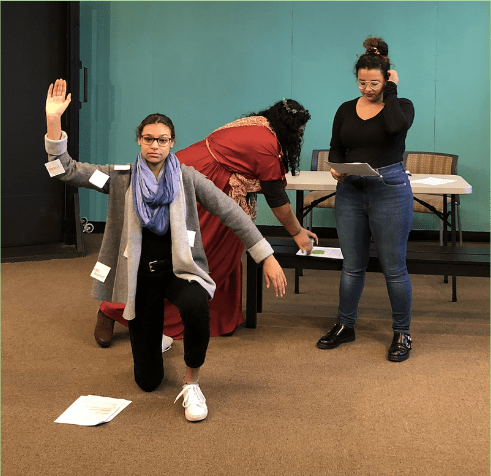
Relational Accountability and Place-Based Learning: Emory Students Participate in 31st Annual Ocmulgee Indigenous Celebration.

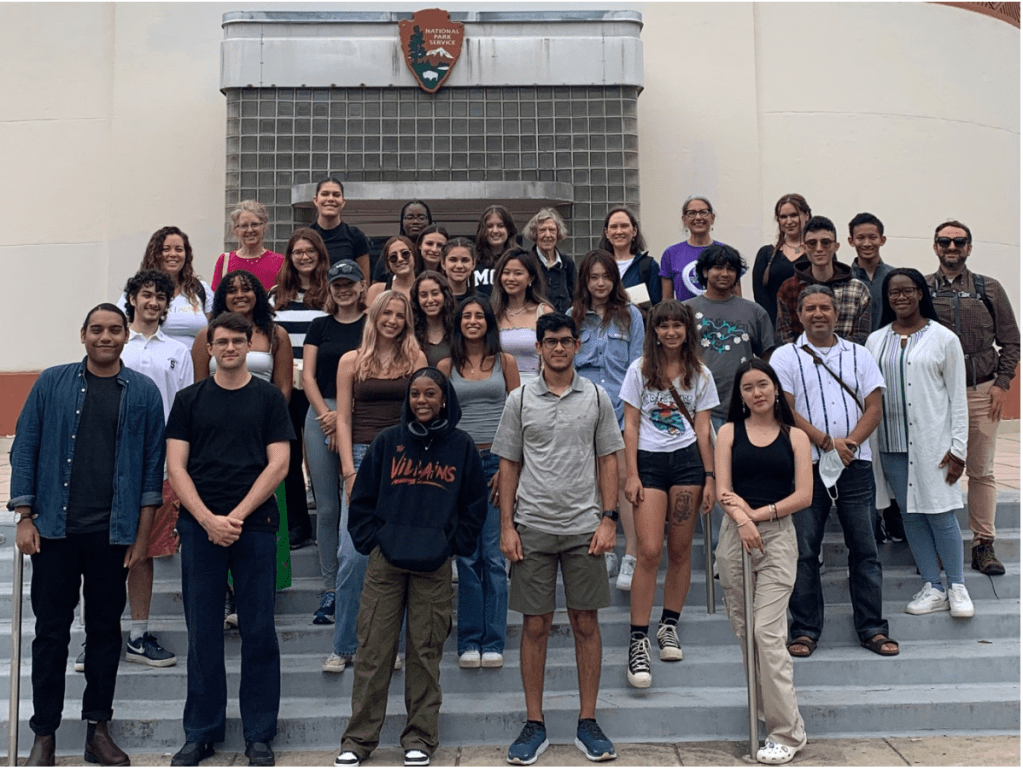
Traveling from Emory to Ocmulgee Mounds National Historic Park for a special place-based and community-engaged learning experience, a first-time interdisciplinary cohort of thirty-five faculty and students from Dr. Debra Vidali’s Anthropology 190–Land, Life, and Place, Dr. Loren Michael Mortimer’s History 285–Introduction to Native American History, Heidi Aklaseaq Senungetuk’s Music 460RW–North American Indigenous Music and Modernity, and Emory’s Native American Student Association participated in a vibrant celebration of Southeastern Native American cultures and heritage. This marks the first time Emory University organized an official trip to the Ocmulgee Mounds National Historic Park.

This celebration represents a collaboration with the Muscogee Nation and the Ocmulgee Mounds Association to enact Mvskoke sovereignty and educate visitors about the Indigenous presence on the land. Emory students experienced a diverse array of activities that showcased the rich heritage of the region’s Indigenous peoples. Traditional cultural crafts, captivating storytelling sessions, and educational programs provided students with meaningful connections to the living histories and thriving communities of diverse southeastern Native American people.

Read the full blog post here!

Emory Anthropology Alumnae Joanna Davidson ’07 and Dinah Hannaford ’14 edit volume publication, Opting Out: Women Messing with Marriage around the World.

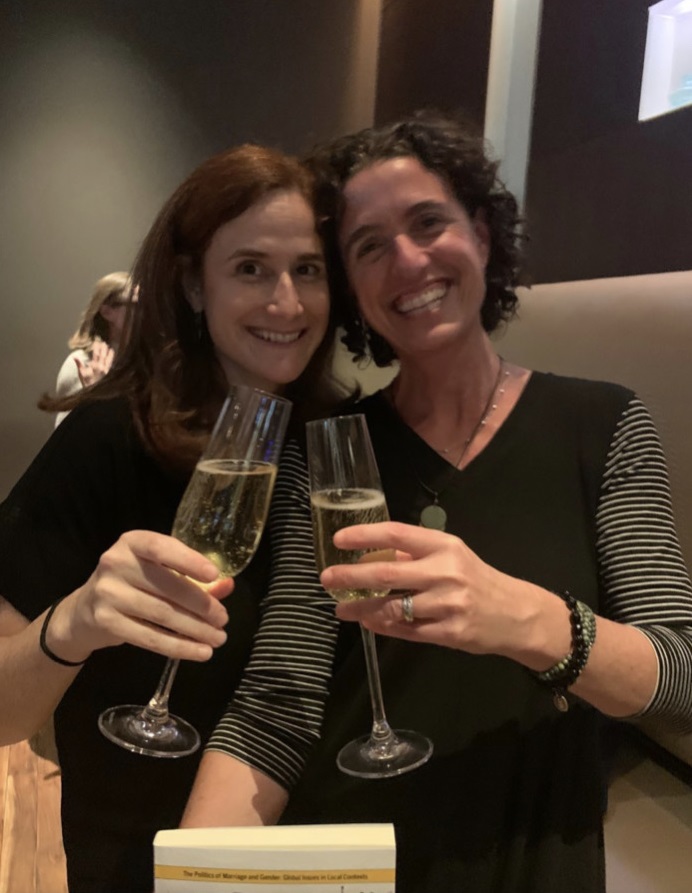
Emory Anthropology alumnae Joanna Davidson ’07 and Dinah Hannaford ’14 joined forces to publish an edited volume, Opting Out: Women Messing with Marriage around the World (Rutgers University Press 2022). The book gathers ethnographic accounts of women moving away from conventional marital arrangements in countries all over the world. From Brazil to Botswana, the contributors examine the conditions that make this widespread – although locally variable – phenomenon possible and consider what the implications of opting out might be, both for marriage itself and for the anthropological study of it.

Postdoctoral Graduate Scott Schnur published in Nature Energy for co-authored article, A Framework to Centre Justice in Energy Transition Innovations.

Postdoctoral Graduate, Scott Schnur collaborated with researchers from the National Renewable Energy Laboratory (NREL) and other universities published an article in Nature Energy titled A Framework to Centre Justice in Energy. In the article, Scott and his colleagues discuss the important role of community engagement as a tool to promote equity in the green Energy Transition. They propose a framework that developers, planners, government officials, and other stakeholders can use in order to promote energy justice and inclusivity in the critical work that lies ahead in transforming our grid and combating climate change. Scott says, “The article continues my interest in exploring ways to promote equity and justice in relation to emergent climate futures.”

Check out the write up from NREL here!

Dr. Peter Little co-authors Reconsidering Resilience in African Pastoralism: Towards a Relational and Contextual Approach

Dr. Peter Little, along with two other authors, recently published Reconsidering Resilience in African Pastoralism: Towards a Relational and Contextual Approach earlier this summer.

What does resilience mean? This is a question frequently asked and one that this book challenges and turns on its head. This book interrogates the increasingly overused concept of resilience by examining its application to a series of case studies focused on pastoralists in Africa. Through anthropological approaches, the book prioritises the localisation of resilience in context and practice; how to promote ‘thinking resilience’ in place of the typical ‘resilience thinking’ approach. Anthropology has the power to raise the vantage point of people and places, make them speak, breath, and live. And this gives to resilience more grounded and quotidian framings: local, relational, political and ever evolving. The authors ask whether development assistance and government intervention enhance the resilience of African pastoralists, while discussing critical topics, such as political power, land privatization, gender, human-animal identities, local networks, farmer-pastoralist relations, and norms and values. The epilogue, in turn, highlights important theoretical and empirical connections between the different case studies and shows how they provide a much more nuanced, culturally and politically meaningful approach to resilience than its common definition of ‘bounce back.’ By approaching resilience from relational and contextual perspectives, the book showcases a counter-narrative to guide more effective humanitarian and development framing and shed light on new avenues of understanding and practicing resilience in this uncertain world.

Purchase your copy from Amazon here!

PhD Student Will Boose has First Peer-reviewed Article Published in Top Social Sciences and Humanities Journal, Histórica.

Will Boose‘s article offers an ambitious, though still fragmented, history of motorcycle taxis in Peru. It offers three central arguments. First, it highlights that motorcycle taxi drivers have played a fundamental role in the production of urban space. Second, it argues that state, elite, and popular discourses about “informality” and the “modern city” stigmatize motorcycle taxi drivers in ways that are classist and racialized, targeting them for strict policing. Finally, it suggests that if we think with motorcycle taxi drivers and the materiality of motorcycle taxis, we can reveal the contradictions inherent to the “formal”-“informal”, and “modern”-“non-modern” binaries and thus more lucidly analyze urban space and relations.”

Histórica, based in Peru, is aimed at researchers and a specialized public and publishes works evaluated by peers that constitute an original contribution to the knowledge of Peruvian, Andean, and Amazonian history, as well as Latin American history and global history directly related to the history of the Andean region. In addition to works on history and ethnohistory, the journal includes works on art history, historical anthropology, historical linguistics, historical geography, historical demography, memory studies, and every other discipline, subdiscipline, and field of study in the Humanities and Sciences.

Check out the article here!

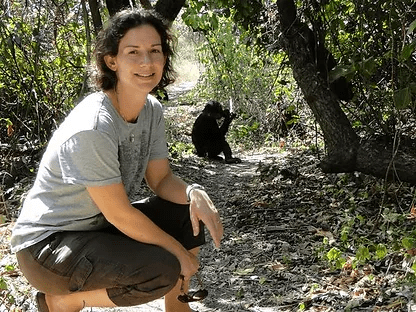
Dr. Elizabeth Lonsdorf Elected as a 2023 Fellow of the Animal Behavior Society.

Dr. Elizabeth Lonsdorf has been elected as a 2023 Fellow of the Animal Behavior Society. The Animal Behavior Society (ABS) is a non-partisan, non-profit, professional organization dedicated to promoting and advancing the scientific study of animal behavior, and to creating an inclusive scientific environment that supports a diverse membership. Fellows are members who have engaged in research in animal behavior for at least ten years and who in the opinion of the elected officers and current Fellows of the society have made distinguished contributions to the field.

Congratulations Dr. Lonsdorf!

Emory Anthropology senior Gracie Wilson wins Lambda Alpha Senior Scholarship

Anthropology BA graduate Gracie Wilson (Ox’21, C’23) is the national first place recipient of the Lambda Alpha National Anthropology Honor Society Senior Scholarship, including $5,000 to help fund her graduate study in anthropology. Each Lambda Alpha chapter may put forward one nominee for the senior scholarship each year. Nominees must be Anthropology majors, Lambda Alpha members, and plan to attend graduate school in Anthropology. The last time Emory’s chapter nominee was selected as the national winner was in 2002.

Gracie was selected as the nominee for Emory’s Lambda Alpha chapter (Beta of Georgia) based on her excellence and leadership in anthropology research. Her senior honors thesis, “The Culture of College Mental Health”, supervised by Oxford professor Alicia DeNicola and ECAS professor Chikako Ozawa-de Silva, began as a research project at Emory’s Oxford College with the goal of better understanding student mental health from an ethnographic approach. The project expanded as Gracie led a team of fellow undergraduate students, and continued across Emory’s two campuses once Gracie transitioned to Emory College and joined the honors program. The team’s findings provide insight into student mental health cultures and how student mental health is created through a series of shared values, narratives, and identities. The work has been presented at the Georgia Undergraduate Research Conference at Valdosta State University and is currently being developed for publication.  

As a graduate student at the University of Chicago pursuing a PhD in Comparative Human Development, Gracie will continue to use anthropological inquiry to explore the ways in which we understand and support college students as they navigate disability, illness, and managed care across educational settings. She is also passionate about the ways anthropology can collaborate with other disciplines– namely with social work, counseling, and the clinical space.

Gracie graduated from Emory this May with Highest Honors in Anthropology, with a concentration in Power, Identity, and Social Justice.

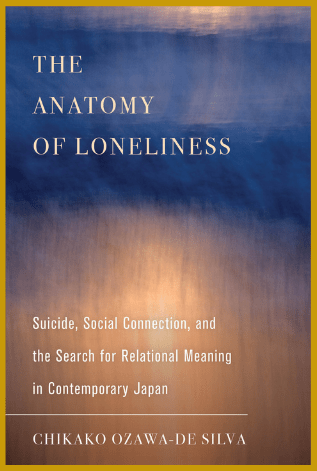
Professor Chikako Ozawa-de Silva awarded 2023 Stirling Book Prize for her book The Anatomy of Loneliness.

Chikako Ozawa-de Silva was honored with the 2023 Stirling Book Prize from the Society for Psychological Anthropology for her most recent book, The Anatomy of Loneliness: Suicide, Social Connection, and the Search for Relational Meaning in Contemporary Japan during the Biennial Society for Psychological Anthropology Conference in San Diego. This is her third book prize this academic year for The Anatomy of Loneliness.

One of the two nominators for this book referred to it aptly as a “beautiful and haunting look at the human need for connection, purpose and the consequences of living in a society that increasingly silos us from each other.” The committee found her book theoretically and empirically rich, carefully analyzed, and beautifully written. The contribution to psychological anthropology is clear and profound, and it also touches on a highly relevant subject of our time with cross-disciplinary implications and implications for society at large: namely, young adults’ experiences of loneliness. Professor Ozawa-De Silva explores the concept of the “lonely society” to analyze and convey the power that societies can have in making “people feel uncared for, unseen, and unimportant” – an issue of global relevance and an innovative contribution to contemporary studies in psychological anthropology on the loss of self and suicide.

Despite the book’s focus on a particular field and particular actors (young adults in Japan), the book’s major asset is to link the analysis of this particular case to wider discourses about the interconnections between inter/subjectivity, empathy, and society. The book thus has a huge potential to help us think through interlinkages between societies in general and the phenomenon of loneliness. The last chapter “What loneliness can teach us” is masterful: the author uses her ethnographic knowledge in a critical and socially committed way to shows what might be taken from this study to improve the well-being of people in general who severely suffer from the current and rising “lonely society”.

Congratulations to Chikako for this outstanding contribution!

Obtain your copy of The Anatomy of Loneliness here!

Laney Graduate School PhD Candidate, William Boose, Wins a Fulbright

William Boose, Laney Graduate School PhD candidate in Anthropology, has been awarded a Fulbright U.S. Student Program award by the U.S. Department of State and the Fulbright Foreign Scholarship Board for the 2023-2024 academic year to study in Peru.

The Fulbright Program is the U.S. government’s flagship international educational exchange program and is supported by the U.S. and partner countries around the world. More than 2,000 diverse U.S. students, artists, and early career professionals in more than 100 different fields of study receive Fulbright U.S. Student Program awards annually to study, teach English, and conduct research overseas.

In his Fulbright-funded dissertation research in Peru, titled “Motorcycle Taxis and Urban Modernity: A Comparative Study in Lima and Iquitos,” Boose will critically study the governance of mototaxis (motorcycle taxis) as situated within broader notions of urban “modernity” and “development” in two cities.

Read the full article here!

Anthropology Honors Students 2023

Congratulations to our 2023 Anthropology honors students! We wish you all the absolute best in your future endeavors!

You can read more about this year’s honors students and their projects on our 2023 Honor Students page.

Hunter Akridge
Thesis Title:
 Contesting the Cultural Politics of Care: How Equitable Digital Care Platforms Reimagine the Future of Work

Rachel Broun
Thesis Title:
 Enacting Solidarity and Negotiating Fictive Kinship: The Legal Consciousness of Black Women Working in the Criminal Legal System

Pamela Chopra Beniwal
Thesis Title:
 The Effect of Commercialization, Militarization, and Stigmatization of the Breast Cancer Awareness Movement on Breast Cancer Patients

Lucia Buscemi
Thesis Title:
 Footprints of the Roof of the World: Navigating the Impacts of Anthropogenic Activities in the Everest Region

Naomi Gonzalez-Garcia
Thesis Title:
Constellations of Un-Matter(ing) & Matter(ing) through Atlanta’s Black Spaces: Anthropological Perspectives on Housing and Relationality

Ruth Korder
Thesis Title:
Detecting Human Adaptations in Populations of the Andean Highlands

Danielle Mangabat
Thesis Title:
 Confronting Colonial Legacies: Imagining a Decolonial Future in the Philippines through Reproductive Health

Natalie McGrath
Thesis Title:
 Recentering the Voices of Pregnant-People and Birth Workers; Narratives of Childbirth

Atlas Moss
Thesis Title:
 Vocal Recognition and Social Knowledge in captive Tufted Capuchin Monkeys (Sapajus apella)

Alvaro Perez Daisson
Thesis Title:
 Race-related Health Disparities in the Context of COVID-19

Tanvi Shah
Thesis Title:
 (Re)constructing Postpartum Depression (PPD) via Cross-Specialty Analysis and an Anthropological Lens of Subjectivity 

Krithika Shrinivas
Thesis Title:
Stone Tools and Sociality: Potential Effects of Conversation and Hobbies on Lithic Quality

Lizzy Wagman
Thesis Title:
 Genome-wide patterns of selection in pre- and post-European contact Caribbean populations

Amy Wang
Thesis Title: 
The Impacts of Social Media on Young Adults’ Body Images in the United States

Sam Weinstein
Thesis Title:
 Vocal Clues to Diabetes Mellitus: Exploring the Ethics and Tech of AI in Clinical Practice

Gracie Wilson
Thesis Title:
 The Culture of College Mental Health: Narratives of Stress, Value, and Belonging 

Christopher Zeuthen
Thesis Title:
 Qualitative Examination of Veteran Perspectives on Moral Injury