Four extraordinary Emory College juniors — Jojo Liu, Yingrong “Momo” Chen, Maddie Hasson, and Tamecka Marcheau-Miller — have won the Goldwater Scholarship, the nation’s top scholarship for undergraduates studying math, natural sciences and engineering. This year’s winners, who have made major contributions in labs and authored or co-authored papers on their research, all plan to pursue doctoral degrees in their respective fields. They join 45 previous Emory recipients of the award, which was endowed by Congress in 1986 to honor the late Sen. Barry Goldwater.
Maddie Hasson is an Anthropology major and rising senior honors student who also won the Trevor E. Stokol scholarship for her undergraduate research.
Congratulations Maddie and to everyone on outstanding academic achievements!
Read the full article and winners’ biographies here!
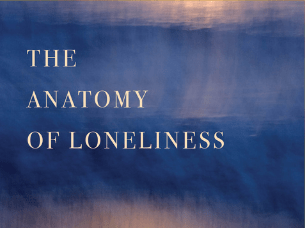
The Francis L. K. Hsu Prize is given to the book that was judged to have made the most significant contribution to the field of Anthropology of East Asia and is awarded by the American Anthropological Association’s Society for East Asian Anthropology. In The Anatomy of Loneliness, Ozawa-de Silva gracefully threads the needle of writing for a non-specialist audience while adding to conversations about loneliness, suicide, and social connection in the anthropology of East Asia. Moreover, she writes about the particularities of a social phenomenon in Japan in ways that speak to global experiences of loneliness as a part of the human condition, but one exacerbated by the structures of modern life and neoliberal policies. To do so, the book draws together current research in anthropology, sociology, psychology, and neuroscience/developmental biology, to theorize the anatomy of loneliness as both individual and social. The chapters chart Ozawa-de Silva’s research journey from a study of the dramatic increase in suicides in Japan beginning in 1998, to her discovery that a lack of social connection, loneliness, and a sense of meaning in life better reflected the stories she encountered than the assumed economic or mental health causes. In order to study suicide ethnographically, the book analyses first, second, and third person accounts seen through the phenomenon of suicide websites, the commodification of intimacy, the perceptions of college students, and the 2011 natural and nuclear disasters. The book ends with a timely focus on the communal loneliness of areas forgotten in post-Fukushima recovery initiatives and emerging examples of their resilience through community. Thus, Ozawa-de Silva writes about suicide and loneliness in Japan in ways that speak to wider global trends while giving us some hint at potentially better ways to live today. The committee also found Chikako’s book to be “poignant, richly ethnographic, and an exemplary instance of a book that really speaks beyond our field.”
The Victor Turner Prize in Ethnographic Writing is an annual juried book award by the American Anthropological Association’s Society for Humanistic Anthropology (SHA). The prize committee “seeks graceful, accessible ethnographic writing which deeply explores its subject and contributes in innovative and engaging ways to the genre(s) of ethnography and the field of humanistic (and/or post-humanistic) anthropology.” Chikako Ozawa-de Silva’s The Anatomy of Loneliness humanistically explores issues of human biology, and it analytically transforms loneliness from an individual state of being into a societal predicament. This book is a jarring, empathetic, and even paradoxical diagnosis of emerging collective social structures that make people feel alone. Along the way, readers are introduced to a brave and novel vision for what an inclusive society might mean. The book’s subject matter, from mental health to suicide, is challenging — but Ozawa-de Silva shows us how to rigorously write these topics in ways that cultivate inclusive engagement rather than reproduce the senses of alienation the book explores. The committee also felt that The Anatomy of Loneliness offers a truly unique, distinguished, and even experimental model of accessibility. This book is lucidly written. it is also a text that creatively and transparently brings the reader alongside the author in all her intellectual premises, all her conceptual inspirations, and every one of her turns of thought.
Watch Professor Ozawa-de Silva read the first 5-minutes of her book here.
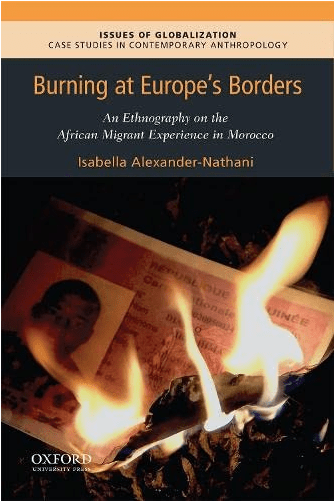
The Association for Africanist Anthropology has awarded Dr. Isabella Alexander the 2022 Elliott P. Skinner Book Award for her book Burning at Europe’s Borders.
This prize is awarded to the book that “best furthers both the global community of Africanist scholars and the wider interests of the African continent, with special consideration given to works drawing upon extensive research in Africa and advancing new methodologies for anthropological fieldwork in Africa.”
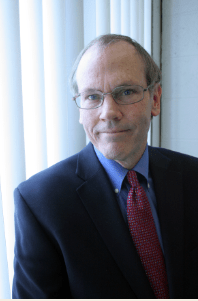
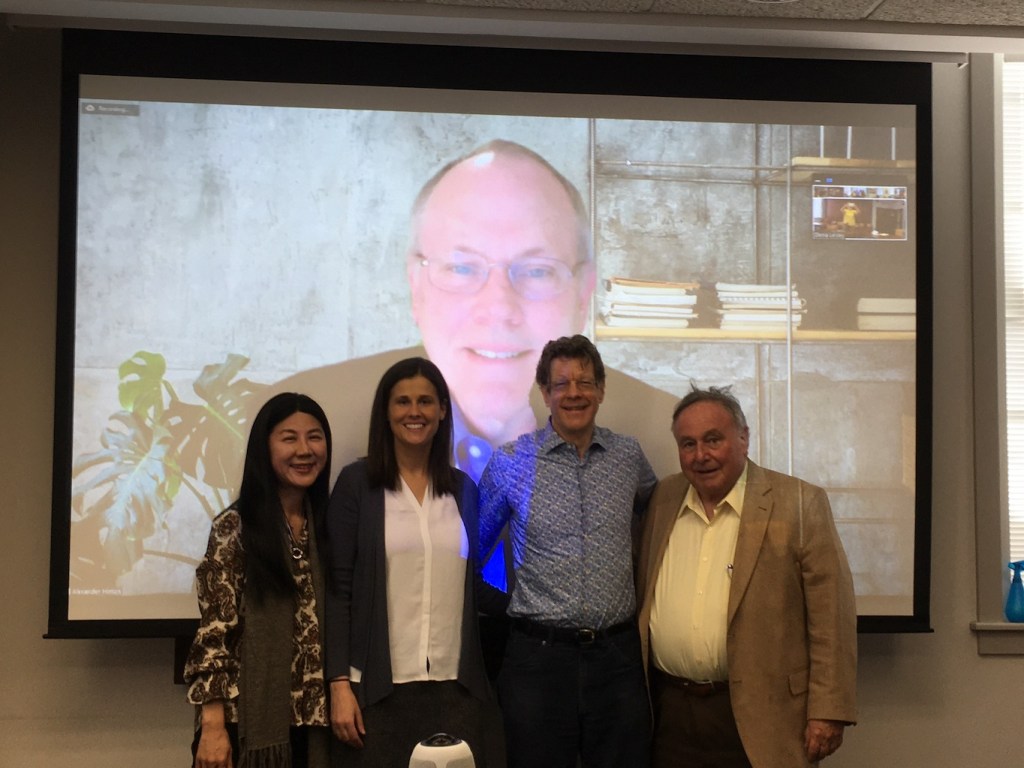
Dr. Alexander Hinton graduated in 1997 and majored in Psychology and Cultural Anthropology. His dissertation was on the Cambodian genocide. Today, he is a Distinguished Professor of Anthropology, Director of the Center for the Genocide and Human Rights, and UNESCO Chair in Genocide Prevention at Rutgers University, Newark. He is an award-winning author and editor of seventeen books, including most recently, Anthropological Witness: Lessons from the Khmer Rouge Tribunal (Cornell, 2022)—which focuses on his testimony as an expert witness at the Khmer Rouge Tribunal and his exchange with “Brother Number Two.”
The AIME award is reserved for persons who have “raised public awareness of anthropology and have had a broad and sustained public impact at local, national, and international level.” Congratulations Dr. Alexander Hinton!
Read more about the AAA 2022 Award Recipients here!
Lori Jahnke, the Department of Anthropology librarian, and her colleagues at the New Jersey Institute of Technology, University of Iowa, and researchers at Fiocruz will share a three-year grant from the National Science Foundation aimed at responsible management of scientific collections created under unequal power dynamics. Jahnke and her colleagues plan to establish and test a methodology for collaborative, community-based work to document and understand subjects’ experience of scientific research and the afterlives of scientific objects that are produced. The project will help researchers reevaluate assumptions about data collection, their methodologies, intellectual property and knowledge production.
Marcela Benítez (Emory University, Emory College of Arts and Sciences, Department of Anthropology) and Jacob Abernethy (Georgia Tech, School of Computer Science) were recipients of the AI.Humanity Seed Grant Program. They were awarded $100,000 in funding towards their proposal to develop and implement “smart” testing stations using artificial intelligence (AI) for long-term cognitive assessment and monitoring of wild capuchin monkeys at the Toboga Forest Reserve in Costa Rica.
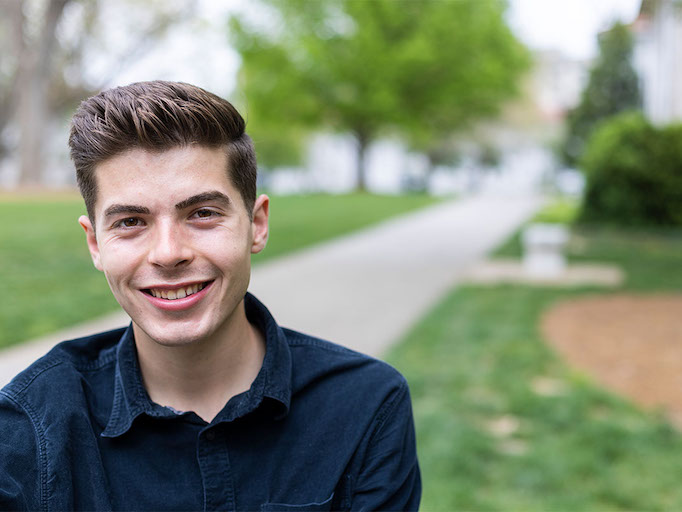
Hunter Akridge is one of 16 Beincke Scholars nationwide. He has received the Department of Anthropology’s Outstanding Junior Award and the Trevor E. Stokol Scholarship for undergraduate research. Find more details on his research in the Emory News article.
Ruşen Bingül, a second-year Ph.D. student, has been awarded the American Ethnological Society (AES) Field Grant and the Halle Institute Global Research Fellowship for her summer doctoral research fieldwork. Both grants are for students who are in the pre-candidacy and whose projects involve ethnographic field research in anthropology or allied fields. Ruşen will use these grants for her summer fieldwork from May 15 to August 20, focusing on legal pluralism and alternative justice mechanism among Kurds in Mardin, the Kurdish Region of Turkey.
Chikako Ozawa-de Silva, Elena Lesley, Bruce Knauft, Bradd Shore
Marjorie Shostak Award for Excellence and Humanity in Ethnography:
1st prize: Elena Lesley for her dissertation “Testimony as Transformation: Resilience, Regeneration, and Moral Action through Spiritually-Adapted Narrative Therapy in Cambodia”, advised by Bruce Knauft.
Runner up: Tatenda Mangurenje for her dissertation “Fractured Belonging: Black Police Officers and the New Civil Rights Movement”, advised by Peter Brown.
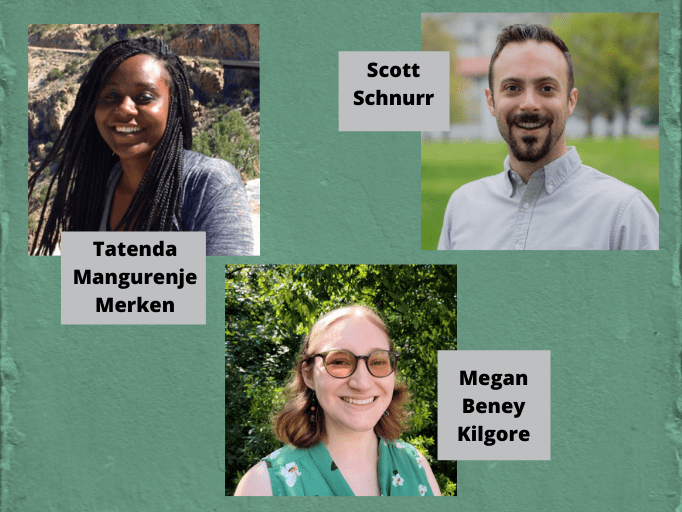
George Armelagos Award for Excellence in Teaching by a Graduate Student: Megan Beney Kilgore and Scott Schnur
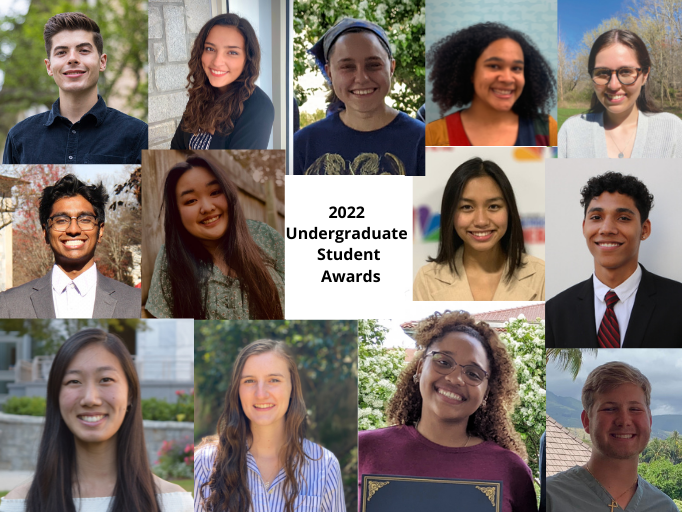
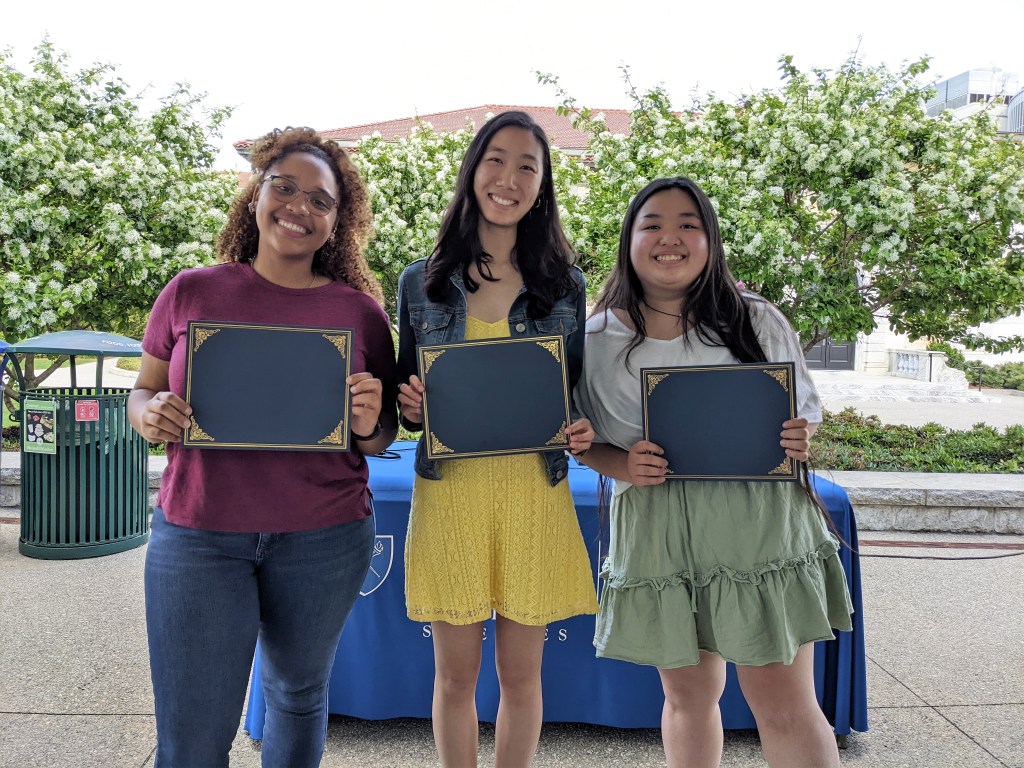
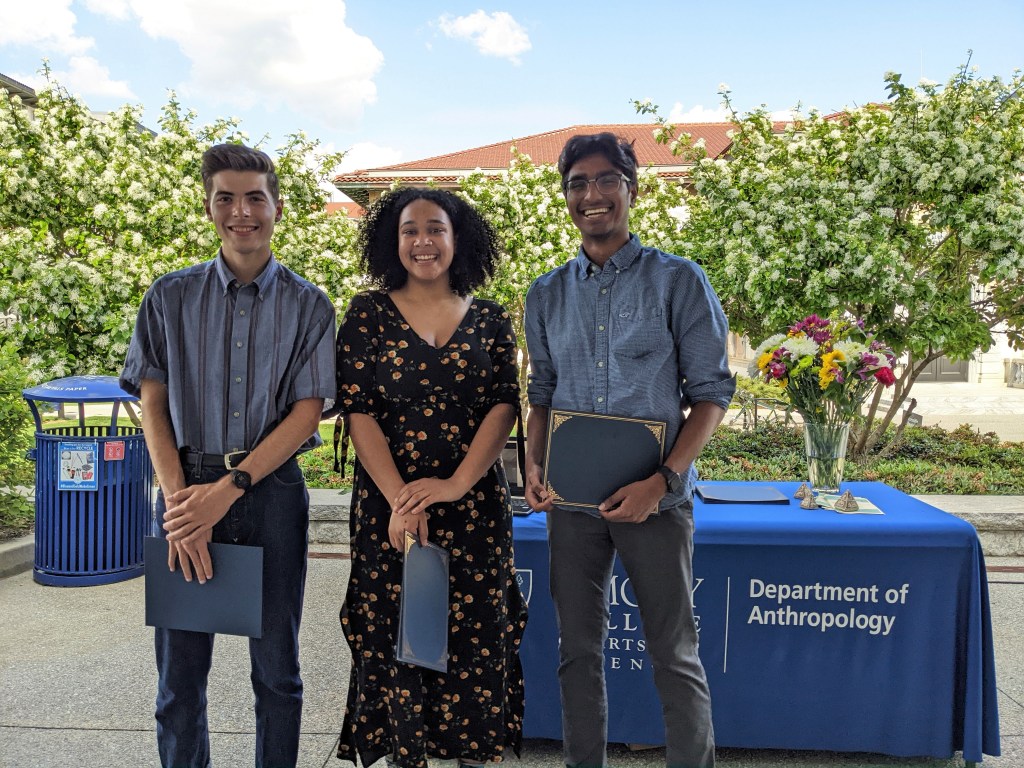
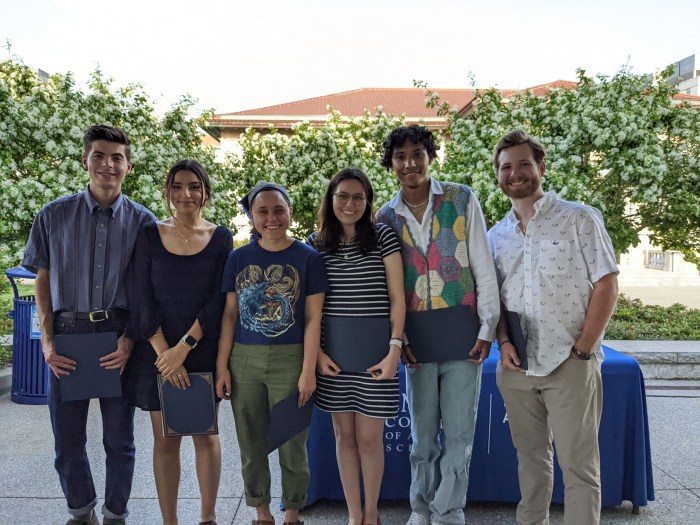
The Anthropology Department is pleased to announce our 2022 student award winners! In addition to granting a record number of departmental awards, we were thrilled to be able to honor seven rising seniors with our first ever Trevor E. Stokol Scholarship, for research which they will be conducting during their senior year. Undergraduate awards were conferred at a ceremony on Monday, April 25. We are so proud of our many impressive students!
Marjorie Shostak Award for Excellence and Humanity in Ethnography:
Priscilla Lin for her honors thesis “Realities of First-Generation, Low-Income Scholars at Predominately White Institutions: The Emory Experience”, advised by Justin Hosbey.
Lauren Oates for her Capstone project “Places of Permanent Precarity: An Examination of Palimpsest Landscapes in Dekalb County’s Constitution Lakes Park”, advised by Kristin Phillips.
Trevor E. Stokol Scholarship for Undergraduate Research
Hunter Akridge
Pamela Beniwal
Sophia Bereaud
Nicole Felix-Tovar
Danielle Mangabat
Alvaro Perez Daisson
Christopher Zeuthen
Hunter Akridge, Pamela Beniwal, Sophia Bereaud, Nicole Felix-Tovar, Alvaro Perez Daisson, Christopher Zeuthen. Not pictured: Danielle Mangabat.




 EMORY ANTHROPOLOGY