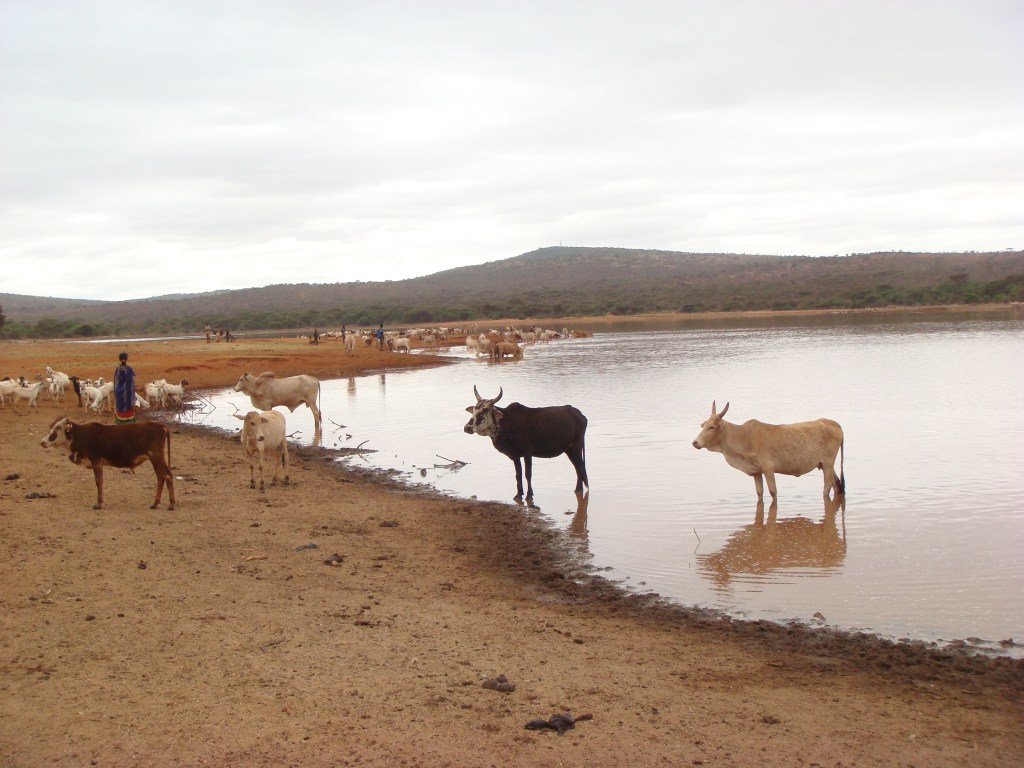
The University Research Committee (URC) has awarded the research team of Dr. David Civitello, Associate Professor of Biology (Principal Investigator) and Dr. Peter Little, Samuel C. Dobbs Professor of Anthropology (Co-Investigator), a $40,000 Interdisciplinary – URC-Halle Institute Global ResearchAward for their project Linking Movement Patterns of Ranging Livestock Herds in Mwanza, Tanzania to Transmission Potential of Human Schistosomes.
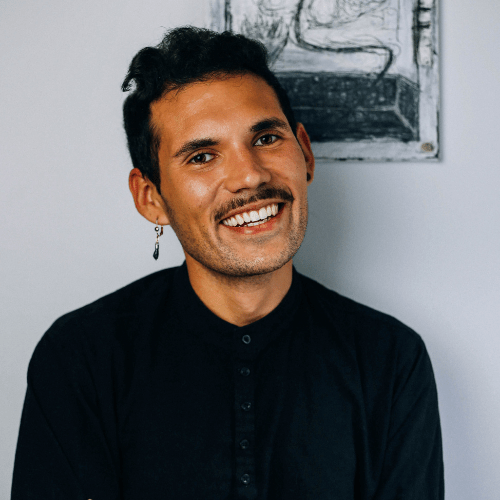
Anthropology Visiting Assistant Professor Nikola Johnson was awarded the 2024 Wenner-Gren Hunt Postdoctoral Fellowship Grant to support 9 months of writing to complete a monograph based on research conducted for his dissertation, titled Emergent Citizenships: Mapuche (Indigenous) and Chilean (non-Indigenous) Politics and Belonging in peri-urban Santiago, Chile.
Professor Johnson said of his project, “This book project explores how the politics of autogestión have led to the emergence of democratic frameworks that contrast with liberal representational democracy in a globalized, neoliberal era. Frequently translated as “self-help”, contemporary scholarship has often distorted the concept of autogestión by analyzing community care practices as responses to neoliberal restructurings or products of neoliberal governmentality. In contrast, my research found that the concept of autogestión is more accurately understood as “lived democratic practice” and traces its origins to the 1960s “People Power” movements in North America and Europe, Latin American Third Worldism, and African decolonization. It draws from my 30 months of ethnographic and archival research which found that the transnational discourse of autogestión influenced the practices of democracy during Chile’s Social Explosion (October 2019), ongoing COVID-19 Pandemic (March 2020-present) and failed process to re-write the constitution written during the Pinochet Dictatorship (October 2022-December 2023). Through situating this Chilean case study within a global assemblage of social movements from the 1960s to the present, this project contributes to the broader anthropological theory of politics by scaling down its analysis to the level of everyday life to analyze where, when, and through whom democratic practices are exercised.”
The Anthropology Department is pleased to announce our 2024 student award winners! Undergraduate awards were presented at our annual Honors and Awards Ceremony on Friday, April 26th. For award descriptions and past winners, visit our Departmental Awards webpage. We are so proud of our many impressive students. Please join us in congratulating them!
Outstanding Senior Award:
Eric Li
Ezra Packard
Elizabeth Whiteside
Outstanding Junior Award:
Krishna Sanaka
Marjorie Shostak Award for Excellence and Humanity in Ethnography:
AJ Jones for her dissertation “Performing the Missing X: Sex, Gender, Disability, and Ambivalent Identity Politics in the United States”, advised by Chikako Ozawa-de Silva and nominated by Bruce Knauft.
Sasha Tycko for her photographic installation “Ways of the Atlanta Forest”, advised by Anna Grimshaw.
Galya Fischer for her Capstone project “Side by Side: An Exploration of Accessibility and Anthropological Research”, advised by Anna Grimshaw.
Trevor E. Stokol Scholarship for Undergraduate Research 2024-25:
Peter Attarian
Kaela Goldstein
Kevin Gunawardana
Sarah Jung
Lydia King
George Armelagos Award for Excellence in Teaching by a Graduate Student:
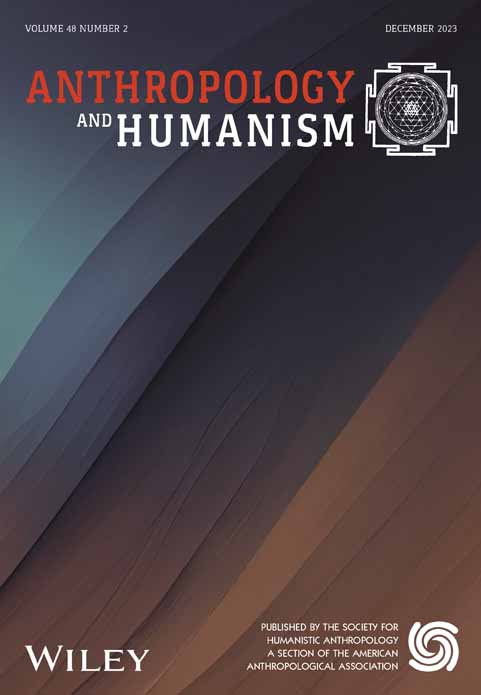
Anthropology Professor Debra Vidali poem, Two Row Repair: A Trilogy, which is featured in the March 2024 issue of the American Anthropological Association journal, Anthropology and Humanism. An abstract and early view of the poem can be accessed on the online library, AnthroSource and a journal issue will be available in the Emory University library later this Spring. Vidali received first place in the 2023 Society for Humanistic Anthropology’s 37th Annual Ethnographic Poetry Competition for Parts II and III of this trilogy.
Katy Lindquist, Anthropology graduate, received a 3-year Postdoctoral Associate position in the Department of Anthropology at Cornell University starting fall following her PhD completion here at Emory University in the Department of Anthropology. The Klarman Fellowship in the College of Arts & Sciences provide postdoctoral opportunities to early-career scholars conducting researching in any discipline. Recipients may conduct research in any discipline and are offered independence and enabled to devote themselves to innovative research without being constrained to specific outcomes or teaching responsibilities.
Katy Lindquist is featured on Cornell University’s website under the Current Fellows. Congratulations Katy!
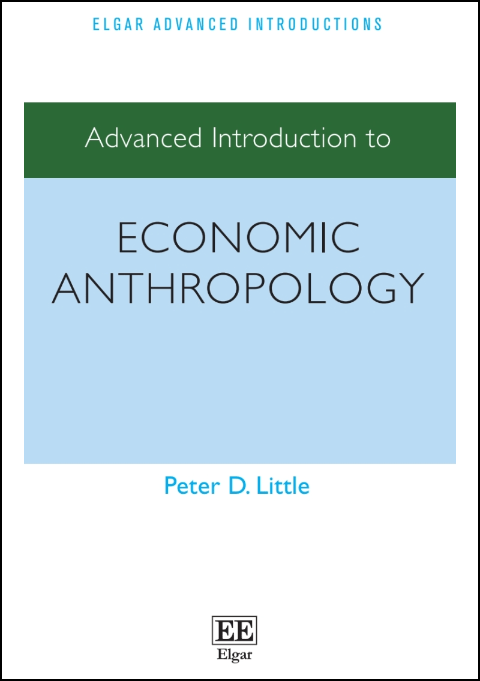
Professor Peter D. Little, Samuel Candler Dobbs Professor of Anthropology and Director of Global Development Studies, recently published a book titled, Advanced Introduction to Economic Anthropology.
The book illustrates how an anthropological perspective can deepen understandings of customary and global markets; different types of money; diversified livelihoods of the poor; gendered and racialized labor; climate change and other global issues. By questioning common dichotomies, such as the informal versus formal sectors and customary versus modern institutions, the book uncovers those hidden connections, power relations, and economic actors and processes that underpin real economies throughout the world.
On December 7th, Dr. Peggy F. Barlett, Goodrich C. White Professor Emerita of Anthropology, received the AASHE Lifetime Achievement Award for her dedication to sustainability in higher education. Dr. Barlett was instrumental in the founding of Emory’s Piedmont Project, training over 640 faculty members from 350+ institutions, and catalyzing a widespread adoption of sustainability-focused curriculum across these institutions.
Her impact extends beyond academia, shaping Emory’s sustainable food initiatives and achieving significant milestones in campus dining sustainability. As a respected author and leader in sustainable education, Dr. Barlett’s contributions span many influential publications and articles.
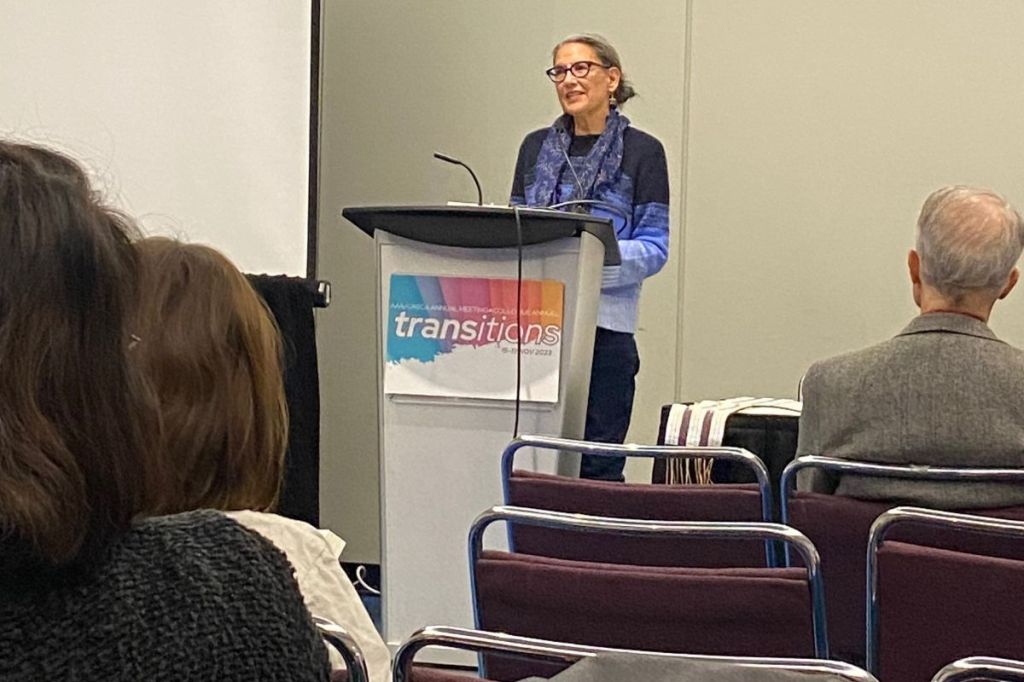
Emory University anthropologist, Professor Debra Vidali is awarded first place in the 2023 Ethnographic Poetry Competition of the American Anthropological Association’s Society for Humanistic Anthropology. Vidali, a sociocultural anthropologist whose work centers on experimental ethnography and ethnographic theater, won for a set of two experimental poems, “Two Row Repair II” and “Two Row Repair III.” The titles refer to the Two Row Wampum belt that encodes the first treaty between Europeans and Haudenosaunee, or the Iroquois Confederacy. The judges praised the connections, saying Vidali’s work “not only speaks about, but embodies, decolonial praxis in a historically anchored way.” Vidali accepted the award in person and read the poetry last month at the Society for Humanistic Anthropology’s annual award ceremony in Toronto.
She says she was motivated to write the poems after a 2022 research journey to find the original location where the Two Row agreement occurred in 1613 between Dutch and Mohawk, near the port of present-day Albany, New York. “The Two Row Wampum is a foundational treaty extending into the present. It conveys expected relations between Haudenosaunee and people of European descent to co-exist in peace, respect and friendship, and in common stewardship for all orders of life, including rivers, plants, animals and earth itself,” Vidali says.
“As a non-Indigenous person who was born and raised on Haudenosaunee lands, and whose ancestors go back to Dutch settlers in the Hudson Valley in the 1630s, I strive to honor this treaty and to communicate to others about it,” she adds. “With the set of poems, I activate and inscribe a journey of ancestral reckoning using the unique affordances of experimental ethnographic writing. It was a deep honor to receive the award, and to have it conferred on Haudenosaunee lands in Tkaronto (Toronto).”
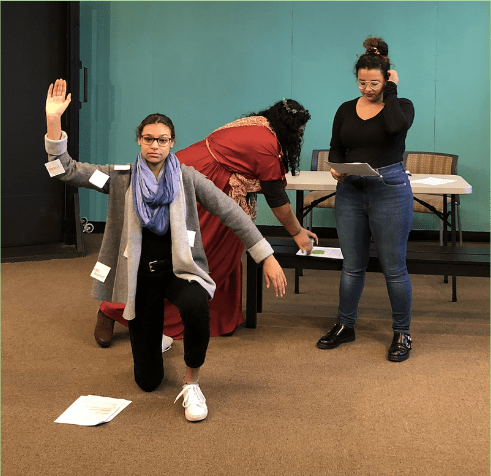
Professor Debra Vidali presented her ethnographic theater project at a meeting of the American Anthropological Association in Toronto recently in November 2023 and has been featured in a blog by Dr. Mitra Emad, the Associate Dean at the College of Arts, Humanities and Social Sciences at the University of Minnesota Duluth. Dr. Emad at this to say about Professor Vidali’s project:
“Recently at the annual meetings of the American Anthropological Association, I attended a follow-up event to a workshop in which anthropologists explored theater making initiatives by clearing a room of furniture and embodying/acting out the text of on ethnographer’s fieldnotes. Many of them had never met before this experiment and the workshop organizer, Debra Vidali (Emory University) functioned as the group’s choreographer. Vidali managed to choreograph a quick (“moving at the speed of light”) and profound sense of belonging in a context (academic conferences) that rarely attend to the body or the flow of resilience that moves between and among the participants. Watching the re-enact and comment upon their experience at a roundtable event the next day, I was struck by how working in and through their bodies to explicate the fieldnotes quickly created a powerful and productive sense of belonging for the impromptu group.”
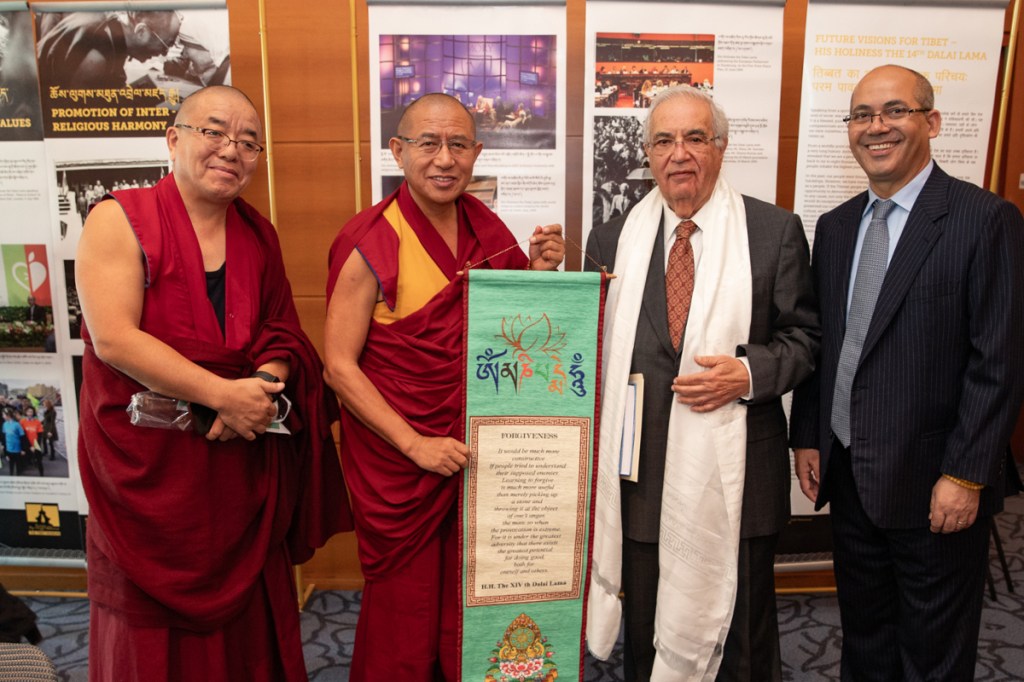
What began as the brainchild of Geshe Lobsang Tenzin Negi and Robert Paul was formalized as the Emory-Tibet Partnership in 1998 and renewed Monday at the beginning of Tibet Week.
Celebrating 25 years, the renewal of the partnership between Emory University and the Drepung Loseling Monastery included senior leadership from the Library of Tibetan Works and Archives, Institute of Buddhist Dialects, and Emory University leaders President Gregory L. Fenves, Provost Ravi V. Bellamkonda and Emory College Dean Barbara Krauthamer who reviewed the Memorandum of Understanding, signed in 1998 in the presence of His Holiness the Dalai Lama, with the current abbot of Drepung Loseling.




 EMORY ANTHROPOLOGY