
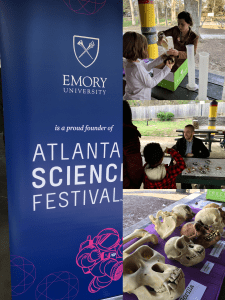
 On March 21st at the Brownwood Park Pavilion, the Department of Anthropology brought archaeology out of the university and into the community as part of the annual Atlanta Science Festival. In “Become an Archaeologist,” children and parents learned about archaeological science, including how to extract DNA, perform chemical residue analysis, and put together artifacts and bones.
Category: Faculty
Carol Worthman suggests a more comprehensive approach to research on youth development
In her recent Journal on Research in Adolescence review paper Worthman argues that puberty and adolescences should not be split up into bio and cultural but seen as a whole. She emphasizes the importance of improving research in this area due to the large numbers, 17% of the worlds population is aged 10-19 right now, and emphasizes the impact of youth development on mental and physical health.
Read more on eScience Commons.
Read more on eScience Commons.
Mel Konner named 2019 honoree for the John F. Morgan, Sr. Distinguished Faculty Lecture
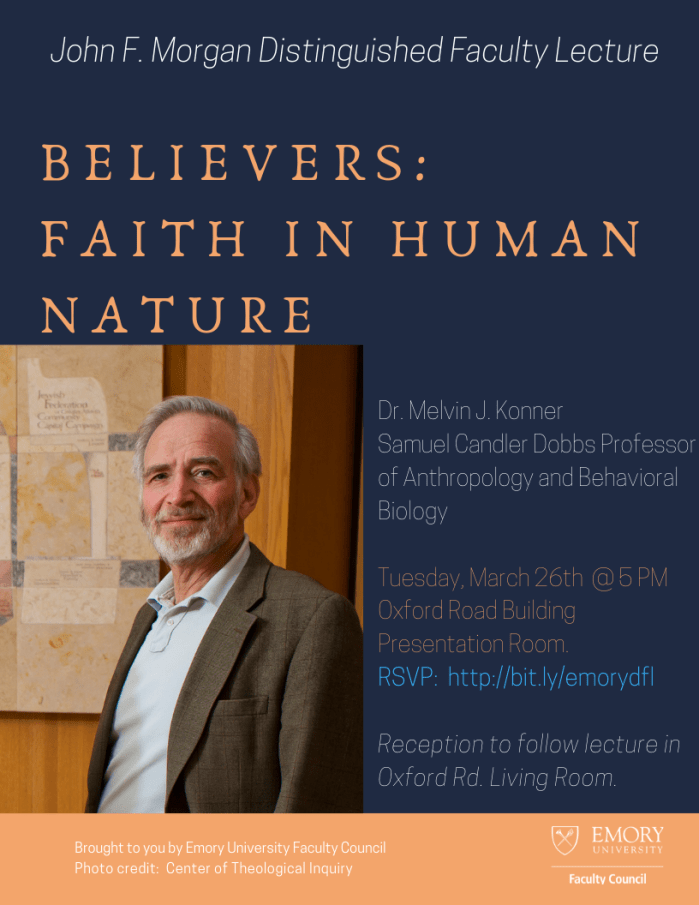
From Emory News: Melvin J. Konner, Samuel Candler Dobbs Professor of Anthropology and Behavioral Biology at Emory, will present this year’s John F. Morgan Sr. Distinguished Faculty Lecture.
Konner will speak on “Believers: Faith in Human Nature,” which is also the title of his forthcoming book, on Tuesday, March 26, at 5 p.m. in the Presentation Room of the Oxford Road Building. RSVP here.
Justin Pargeter’s research on miniaturized tools is featured in Emory News
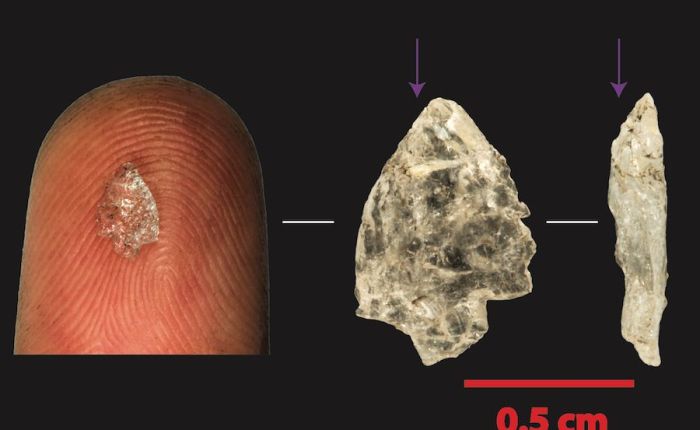
The journal Evolutionary Anthropology is publishing the first overview of prehistoric tool miniaturization, a technology which has been largely overlooked in the stone tool record. The paper, co-authored by current Emory Anthropology post-doc Justin Pargeter, argues that technological miniaturization was a central tendency in hominin technologies going back at least 2.6 million years and may have helped some humans survive climate change during the last period of rapid global climate change.
Carol Worthman’s research on sleep is cited in Aeon article

“Here’s to naps and snoozes.” In his article Todd Pitock summarizes the American culture of sleep and its perceptions of what is considered acceptable and contextualizes it with international examples. He quotes Dr. Worthman who’s research on sleep around the world has shown it as “more flexible and more social” then sleep is considered in the West. Communal sleeping arrangement are more common and can be based on an array of reasons such as comfort or safety, while the West has a tendency to judge sleep by its number of hours spend not being productive.
Mel Konner publishes book review essay in The Atlantic
In “A Bold New Theory Proposes That Humans Tamed Themselves” Dr. Konner contextualizes the research published by in “ The Goodness Paradox: The Strange Relationship Between Virtue and Violence in Human Evolution”.
Give it a read here.
Peter Little delivers the African Studies Review Distinguished Lecture
 Peter Little delivers the African Studies Review Distinguished Lecture at the 61st Annual Meetings of the African Studies Association (ASA), Atlanta, GA, November 30, 2018 The ASA is the largest professional association of African specialists in the world.
Dr. Justin Pargeter publishes research on prehistoric toolmaking

In a recent publication in the journal Antiquity, Justin Pargeter (a Postdoctoral researcher with Emory University’s Anthropology Department) argues the motivations of prehistoric hunter-gatherers for selecting particular rocks for toolmaking are often explained in too rigidly functional or symbolic terms. By examining the exploitation of crystal quartz at two archaeological sites (Ntloana Tšoana and Sehonghong) in Lesotho, southern Africa, he and his co-author Jamie Hampson (University of Exeter) reveal that stone tool production required a form of engagement unique to crystal quartz’s specific properties (including possibly quartz crystal’s piezoelectric effects). The prefered use of quartz crystals—irrespective of the availability of other rocks for tool production—demonstrates agency and variability in the prehistoric technologies.

Calling all knappers – Dr. Stout studies the connection between ancient stone tool-making and the human brain

Dr. Dietrich Stout is an experimental archeologist at the department of Anthropology where he researches connections between prehistoric stone tool-making, known as knapping, and the human brain. He has set up an online experiment in collaboration with Robert Rein at the German Sport University Cologne. Participants are asked to spend 10 minutes of their time to help deepen our understanding of the relationship between the visual-spatial skills used in knapping and areas of the brain that are involved in language processing. Dr. Stout is hoping to establish whether participants can differentiate size the of stone flakes removed during knapping, and how novice knappers fare in comparison to experts.
Read more about this on eScienceCommons and Dr. Stout’s website.
Peter Little’s research is spotlighted in the Chronicle
Dr. Little participated in the Happiness and Well-being Project based at Saint Luis University along with over 150 other researchers from 20 nation and spanning multiple fields. The Chronicle Article spotlighted the work done by Dr. Little in collaboration with Workneh Negatu (Agricultural Economics, Addis Ababa University) and Mark Risjord (Philosophy, Emory University), which focused on life satisfaction and well-being in northern Kenya and Ethiopia.
 EMORY ANTHROPOLOGY