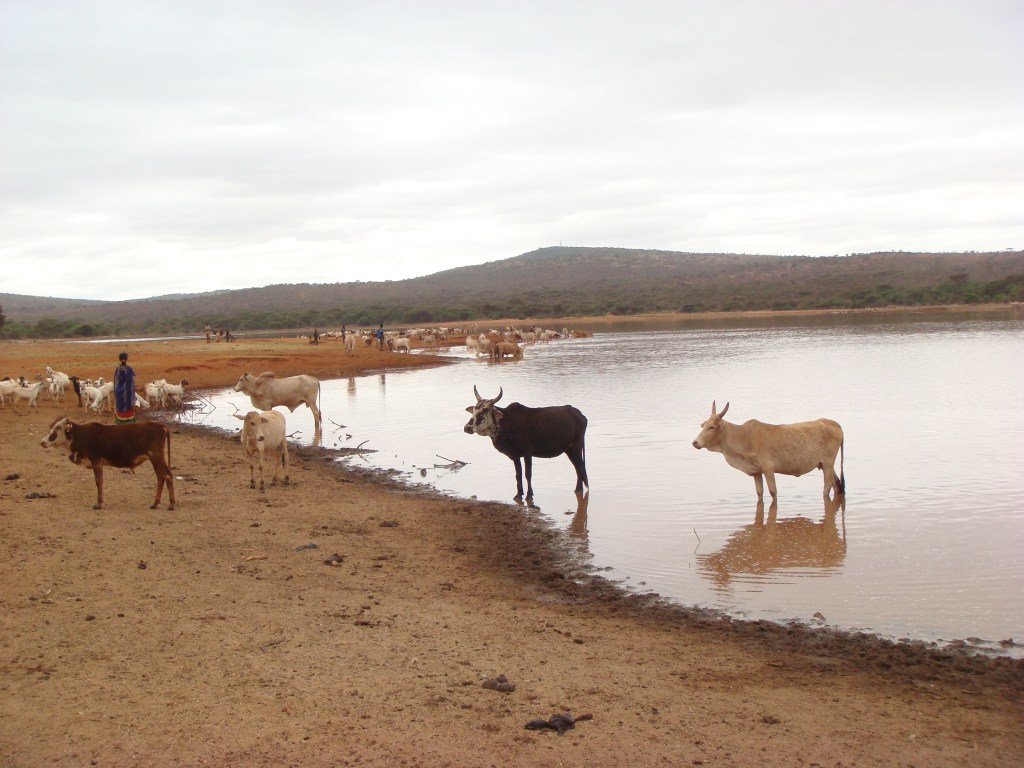
The University Research Committee (URC) has awarded the research team of Dr. David Civitello, Associate Professor of Biology (Principal Investigator) and Dr. Peter Little, Samuel C. Dobbs Professor of Anthropology (Co-Investigator), a $40,000 Interdisciplinary – URC-Halle Institute Global ResearchAward for their project Linking Movement Patterns of Ranging Livestock Herds in Mwanza, Tanzania to Transmission Potential of Human Schistosomes.
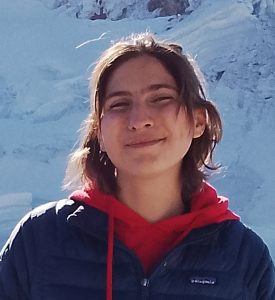
Lucia Buscemi graduated from Emory University in 2024 with a B.A. in Anthropology and a B.S. in Environmental Science. They are now working as a researcher in Nepal under the Fulbright US Student Researcher Program. Lucia’s project focuses on investigating the impacts of climate change on mountain tourism and traditional migration patterns in the Khumbu Valley (Everest region) in collaboration with the International Centre for Integrated Mountain Development (ICIMOD) and Sagarmatha Next. Lucia’s interest in studying the effects of anthropogenic activities in the Nepalese Himalayas began with their experience as a Halle Institute Undergraduate Fellow at Emory.
During the summer of 2022, Lucia received a grant through Halle to conduct research for their Anthropology honors thesis in the Khumbu region. Their thesis research focused on the effects of the adventure tourism industry and climate change on the culture and livelihoods of residents of the Everest region, exploring how the autonomy of these communities is affected by and persists through recent anthropogenic changes. Lucia’s Fulbright research builds upon their prior experiences in Nepal, including an internship at Sagarmatha Next in Kathmandu during the summer of 2023, where they developed a sustainability certification program designed specifically for lodges and hotels in the Himalayas. Their upcoming Fulbright project is poised to offer valuable insights into the intricate interplay between climate change, tourism dynamics, and socio-economic patterns in the Himalayan region.
The Fulbright U.S. Student Program expands perspectives through academic and professional advancement and cross-cultural dialogue. Fulbright creates connections in a complex and changing world. In partnership with more than 140 countries worldwide, the Fulbright U.S. Student Program offers unparalleled opportunities in all academic disciplines to passionate and accomplished graduating college seniors, graduate students, and young professionals from all backgrounds. Program participants pursue graduate study, conduct research, or teach English abroad.
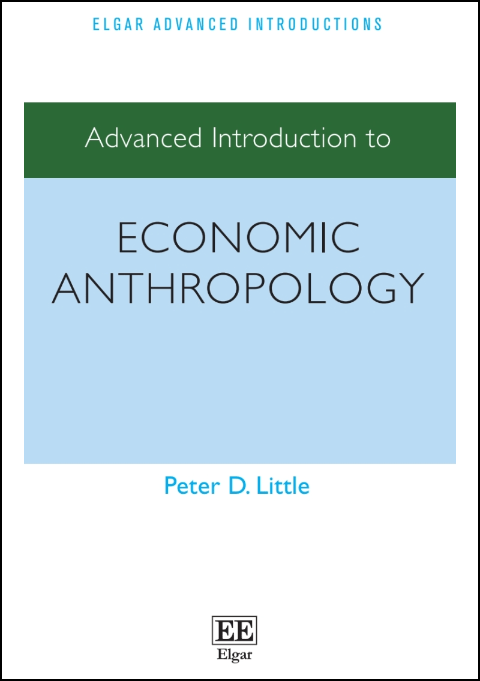
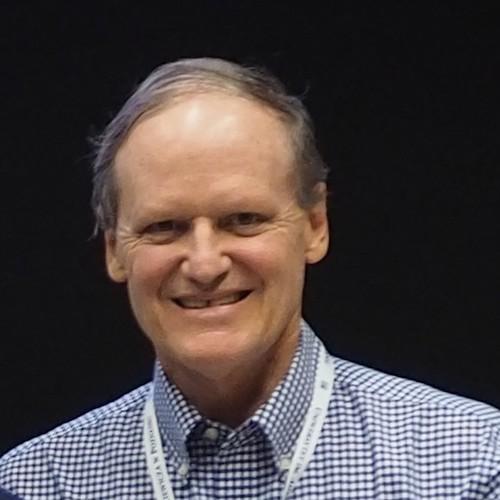
Professor Peter D. Little, Samuel Candler Dobbs Professor of Anthropology and Director of Global Development Studies, recently published a book titled, Advanced Introduction to Economic Anthropology.
The book illustrates how an anthropological perspective can deepen understandings of customary and global markets; different types of money; diversified livelihoods of the poor; gendered and racialized labor; climate change and other global issues. By questioning common dichotomies, such as the informal versus formal sectors and customary versus modern institutions, the book uncovers those hidden connections, power relations, and economic actors and processes that underpin real economies throughout the world.
Dr. Peter Little, along with two other authors, recently published Reconsidering Resilience in African Pastoralism: Towards a Relational and Contextual Approach earlier this summer.
What does resilience mean? This is a question frequently asked and one that this book challenges and turns on its head. This book interrogates the increasingly overused concept of resilience by examining its application to a series of case studies focused on pastoralists in Africa. Through anthropological approaches, the book prioritises the localisation of resilience in context and practice; how to promote ‘thinking resilience’ in place of the typical ‘resilience thinking’ approach. Anthropology has the power to raise the vantage point of people and places, make them speak, breath, and live. And this gives to resilience more grounded and quotidian framings: local, relational, political and ever evolving. The authors ask whether development assistance and government intervention enhance the resilience of African pastoralists, while discussing critical topics, such as political power, land privatization, gender, human-animal identities, local networks, farmer-pastoralist relations, and norms and values. The epilogue, in turn, highlights important theoretical and empirical connections between the different case studies and shows how they provide a much more nuanced, culturally and politically meaningful approach to resilience than its common definition of ‘bounce back.’ By approaching resilience from relational and contextual perspectives, the book showcases a counter-narrative to guide more effective humanitarian and development framing and shed light on new avenues of understanding and practicing resilience in this uncertain world.
Ruşen Bingül, a second-year Ph.D. student, has been awarded the American Ethnological Society (AES) Field Grant and the Halle Institute Global Research Fellowship for her summer doctoral research fieldwork. Both grants are for students who are in the pre-candidacy and whose projects involve ethnographic field research in anthropology or allied fields. Ruşen will use these grants for her summer fieldwork from May 15 to August 20, focusing on legal pluralism and alternative justice mechanism among Kurds in Mardin, the Kurdish Region of Turkey.
The 25th anniversary of Peter Little and Michael Watts’ edited book, Living Under Contract: Contract Farming and Agrarian Transformation in Sub-Saharan Africa (with Michael Watts), is the basis of a Special Issue of the Journal of Agrarian Change (Volume 22, Number 1, 2022).
The introduction to the journal issue discusses how “it was the publication in 1994 of Living Under Contract: Contract Farming and Agrarian Transformation in Sub-Saharan Africa, a collection edited by Peter Little and Michael Watts, that marked a seminal moment in critical scholarship on contract farming in the developing world. . . . The legacy of Living Under Contract is evident in the sustained engagement with contract farming by critical scholars in the subsequent three decades since its publication (see Vicol et al. 2022, 3-4, https://onlinelibrary.wiley.com/doi/full/10.1111/joac.12471 . )” Peter Little and Michael Watts were invited to write the epilogue, titled “The afterlife of Living under Contract,” to the Special Issue (see Little and Watts https://onlinelibrary.wiley.com/doi/full/10.1111/joac.12467 )


 EMORY ANTHROPOLOGY