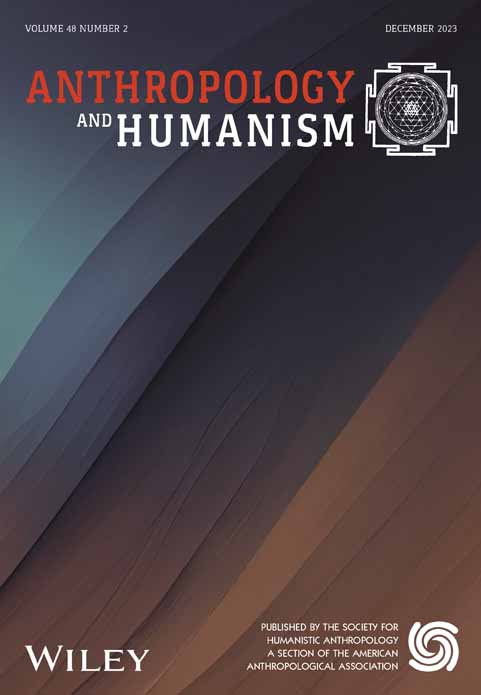
Anthropology Professor Debra Vidali poem, Two Row Repair: A Trilogy, which is featured in the March 2024 issue of the American Anthropological Association journal, Anthropology and Humanism. An abstract and early view of the poem can be accessed on the online library, AnthroSource and a journal issue will be available in the Emory University library later this Spring. Vidali received first place in the 2023 Society for Humanistic Anthropology’s 37th Annual Ethnographic Poetry Competition for Parts II and III of this trilogy.
The Anthropology department just celebrated the opening of “Ways of the Atlanta Forest,” an exhibition of photographs by one of our PhD candidates, Sasha Tycko (C’19). The exhibition is based on Tycko’s dissertation research, which focuses on the life of the “Atlanta forest,” the site of intense conflict over the City of Atlanta’s plan to build a police training complex known as “Cop City.” Over two years, Tycko lived and worked in the forest, using a range of media, including analogue photography, to explore how the abandoned forest landscape—formerly the site of a city prison farm and a slave plantation—motivates new articulations of history, nature, and ethics. Working with the visual language of landscape photography, Tycko’s photographs cast the landscape as a layered repository of history and imagination.
This exhibition inaugurates the Department of Anthropology’s new exhibition space, which is meant to foster dialogue across campus and stimulate debate about what might constitute an engaged anthropology.
There will be a public discussion about “Ways of the Atlanta Forest” between Sasha Tycko and Jason Francisco (Film & Media, Visual Arts) on March 19th, from 1:00pm – 2:30pm in Anthropology building room 206. All photographs are gelatin silver prints handmade by Tycko in Emory’s chemical darkroom.
Sasha Tycko also recently published an essay based on her dissertation research, “Not One Tree,” in n+1 magazine.
Katy Lindquist, Anthropology graduate, received a 3-year Postdoctoral Associate position in the Department of Anthropology at Cornell University starting fall following her PhD completion here at Emory University in the Department of Anthropology. The Klarman Fellowship in the College of Arts & Sciences provide postdoctoral opportunities to early-career scholars conducting researching in any discipline. Recipients may conduct research in any discipline and are offered independence and enabled to devote themselves to innovative research without being constrained to specific outcomes or teaching responsibilities.
Katy Lindquist is featured on Cornell University’s website under the Current Fellows. Congratulations Katy!
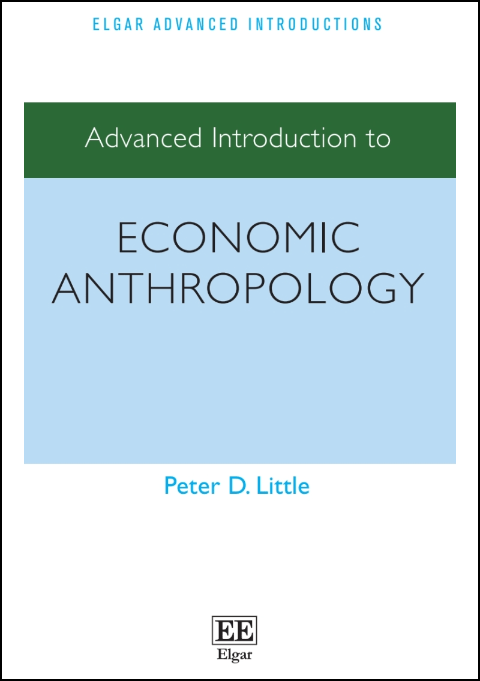
Professor Peter D. Little, Samuel Candler Dobbs Professor of Anthropology and Director of Global Development Studies, recently published a book titled, Advanced Introduction to Economic Anthropology.
The book illustrates how an anthropological perspective can deepen understandings of customary and global markets; different types of money; diversified livelihoods of the poor; gendered and racialized labor; climate change and other global issues. By questioning common dichotomies, such as the informal versus formal sectors and customary versus modern institutions, the book uncovers those hidden connections, power relations, and economic actors and processes that underpin real economies throughout the world.
On December 7th, Dr. Peggy F. Barlett, Goodrich C. White Professor Emerita of Anthropology, received the AASHE Lifetime Achievement Award for her dedication to sustainability in higher education. Dr. Barlett was instrumental in the founding of Emory’s Piedmont Project, training over 640 faculty members from 350+ institutions, and catalyzing a widespread adoption of sustainability-focused curriculum across these institutions.
Her impact extends beyond academia, shaping Emory’s sustainable food initiatives and achieving significant milestones in campus dining sustainability. As a respected author and leader in sustainable education, Dr. Barlett’s contributions span many influential publications and articles.
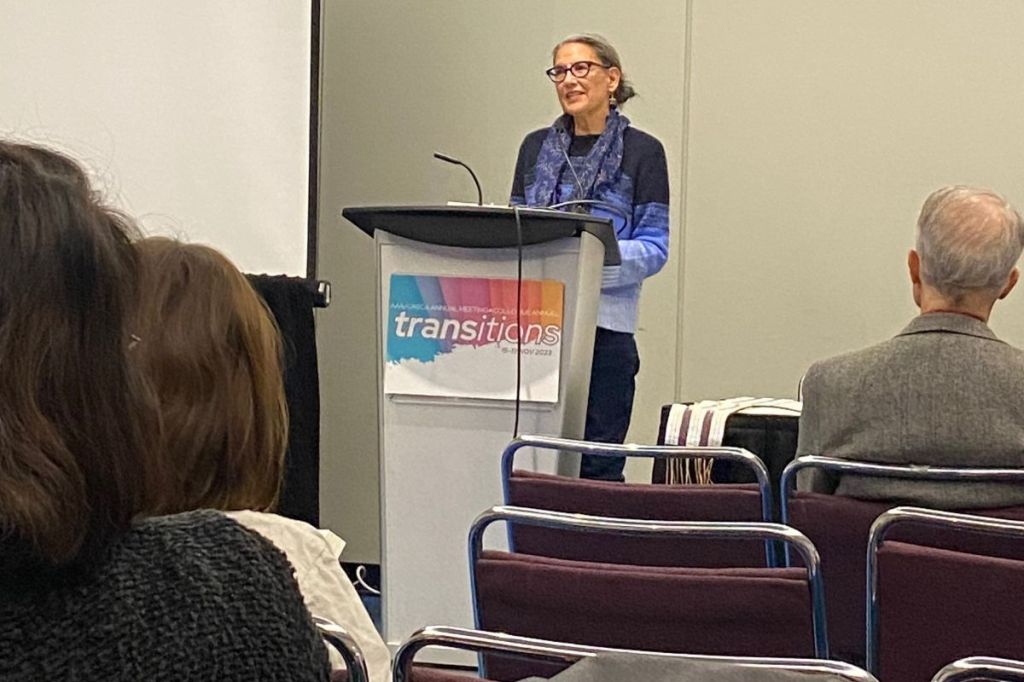
Emory University anthropologist, Professor Debra Vidali is awarded first place in the 2023 Ethnographic Poetry Competition of the American Anthropological Association’s Society for Humanistic Anthropology. Vidali, a sociocultural anthropologist whose work centers on experimental ethnography and ethnographic theater, won for a set of two experimental poems, “Two Row Repair II” and “Two Row Repair III.” The titles refer to the Two Row Wampum belt that encodes the first treaty between Europeans and Haudenosaunee, or the Iroquois Confederacy. The judges praised the connections, saying Vidali’s work “not only speaks about, but embodies, decolonial praxis in a historically anchored way.” Vidali accepted the award in person and read the poetry last month at the Society for Humanistic Anthropology’s annual award ceremony in Toronto.
She says she was motivated to write the poems after a 2022 research journey to find the original location where the Two Row agreement occurred in 1613 between Dutch and Mohawk, near the port of present-day Albany, New York. “The Two Row Wampum is a foundational treaty extending into the present. It conveys expected relations between Haudenosaunee and people of European descent to co-exist in peace, respect and friendship, and in common stewardship for all orders of life, including rivers, plants, animals and earth itself,” Vidali says.
“As a non-Indigenous person who was born and raised on Haudenosaunee lands, and whose ancestors go back to Dutch settlers in the Hudson Valley in the 1630s, I strive to honor this treaty and to communicate to others about it,” she adds. “With the set of poems, I activate and inscribe a journey of ancestral reckoning using the unique affordances of experimental ethnographic writing. It was a deep honor to receive the award, and to have it conferred on Haudenosaunee lands in Tkaronto (Toronto).”
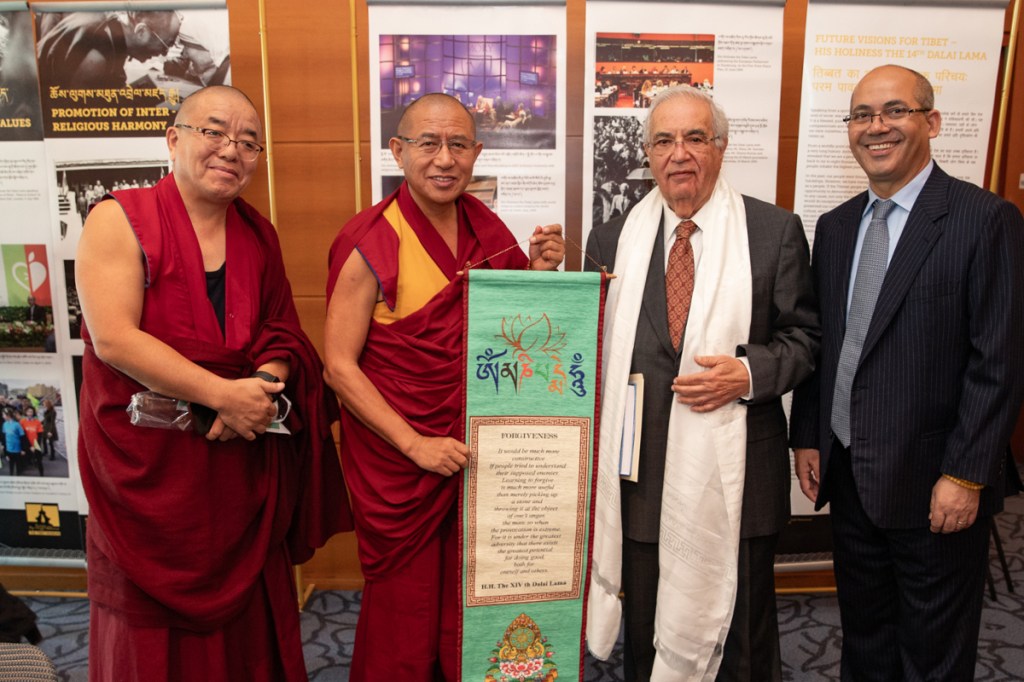
What began as the brainchild of Geshe Lobsang Tenzin Negi and Robert Paul was formalized as the Emory-Tibet Partnership in 1998 and renewed Monday at the beginning of Tibet Week.
Celebrating 25 years, the renewal of the partnership between Emory University and the Drepung Loseling Monastery included senior leadership from the Library of Tibetan Works and Archives, Institute of Buddhist Dialects, and Emory University leaders President Gregory L. Fenves, Provost Ravi V. Bellamkonda and Emory College Dean Barbara Krauthamer who reviewed the Memorandum of Understanding, signed in 1998 in the presence of His Holiness the Dalai Lama, with the current abbot of Drepung Loseling.
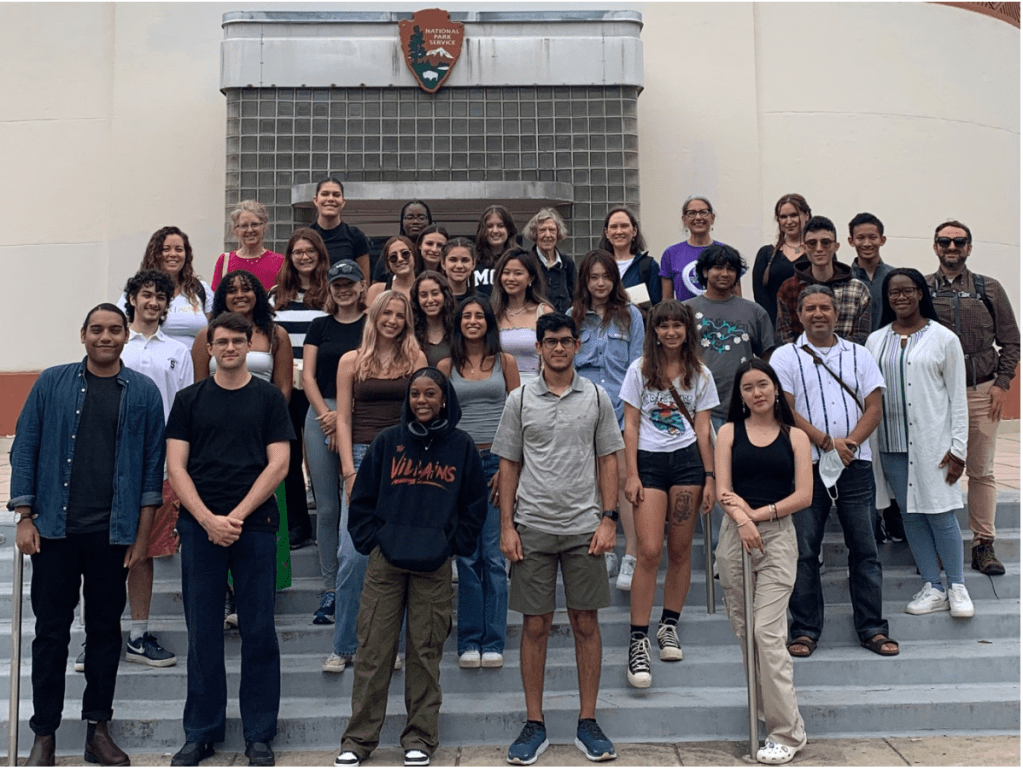
Traveling from Emory to Ocmulgee Mounds National Historic Park for a special place-based and community-engaged learning experience, a first-time interdisciplinary cohort of thirty-five faculty and students from Dr. Debra Vidali’s Anthropology 190–Land, Life, and Place, Dr. Loren Michael Mortimer’s History 285–Introduction to Native American History, Heidi Aklaseaq Senungetuk’s Music 460RW–North American Indigenous Music and Modernity, and Emory’s Native American Student Association participated in a vibrant celebration of Southeastern Native American cultures and heritage. This marks the first time Emory University organized an official trip to the Ocmulgee Mounds National Historic Park.
This celebration represents a collaboration with the Muscogee Nation and the Ocmulgee Mounds Association to enact Mvskoke sovereignty and educate visitors about the Indigenous presence on the land. Emory students experienced a diverse array of activities that showcased the rich heritage of the region’s Indigenous peoples. Traditional cultural crafts, captivating storytelling sessions, and educational programs provided students with meaningful connections to the living histories and thriving communities of diverse southeastern Native American people.
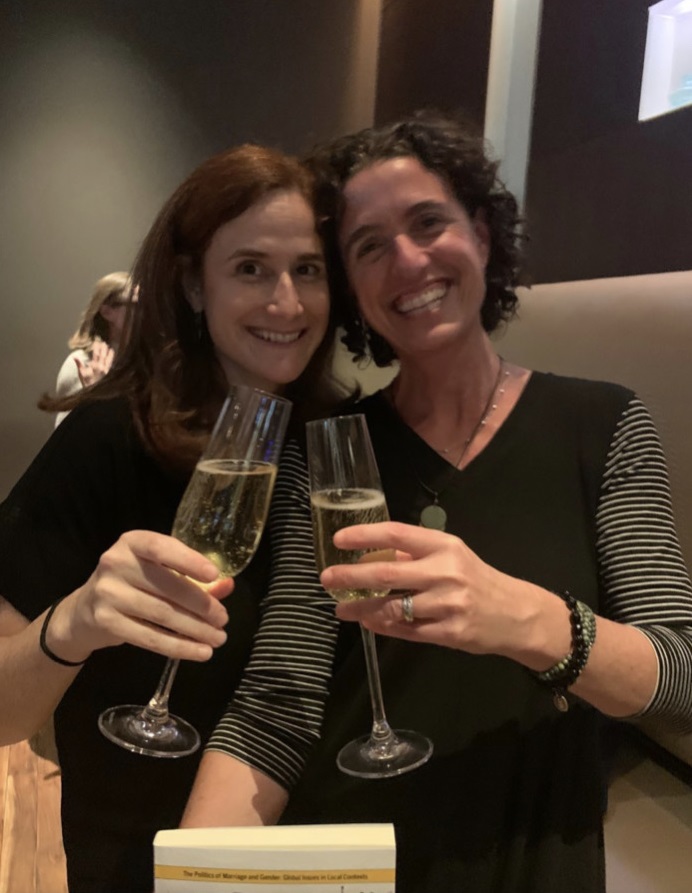
Emory Anthropology alumnae Joanna Davidson ’07 and Dinah Hannaford ’14 joined forces to publish an edited volume, Opting Out: Women Messing with Marriage around the World (Rutgers University Press 2022). The book gathers ethnographic accounts of women moving away from conventional marital arrangements in countries all over the world. From Brazil to Botswana, the contributors examine the conditions that make this widespread – although locally variable – phenomenon possible and consider what the implications of opting out might be, both for marriage itself and for the anthropological study of it.
Postdoctoral Graduate, Scott Schnur collaborated with researchers from the National Renewable Energy Laboratory (NREL) and other universities published an article in Nature Energy titled A Framework to Centre Justice in Energy. In the article, Scott and his colleagues discuss the important role of community engagement as a tool to promote equity in the green Energy Transition. They propose a framework that developers, planners, government officials, and other stakeholders can use in order to promote energy justice and inclusivity in the critical work that lies ahead in transforming our grid and combating climate change. Scott says, “The article continues my interest in exploring ways to promote equity and justice in relation to emergent climate futures.”





 EMORY ANTHROPOLOGY