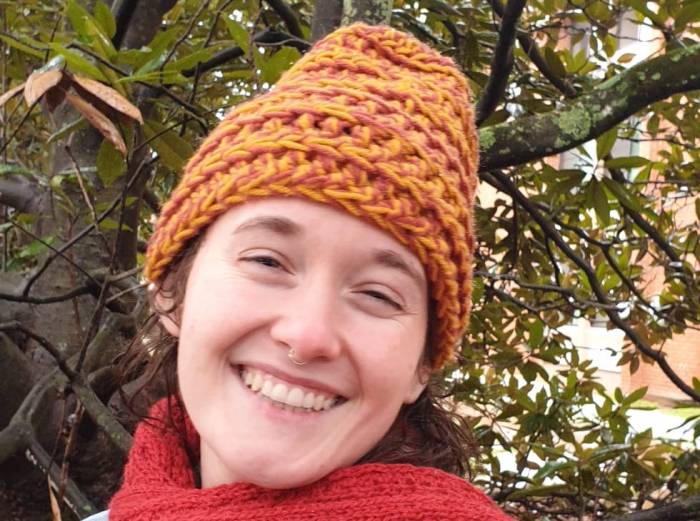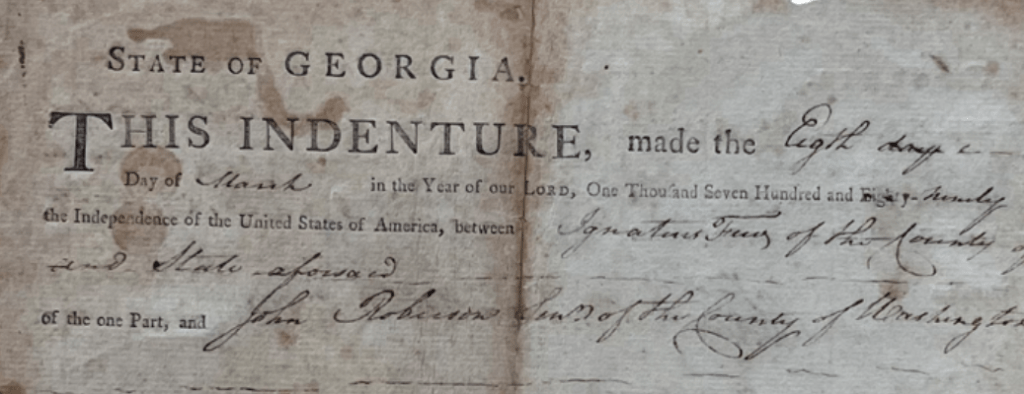
Anthropology major Andrea Lopez and classmates create The Emory 1836 Project, highlighting Emory origins and history of the deportation of the Muscogee and Cherokee peoples.

The Emory 1836 Project is a dynamic digital humanities website, created by students in the Reparative History at Emory course, that re-centers the university’s origins within the historical context of the forced deportation of the Muscogee and Cherokee peoples from Georgia and the national expansion of slavery. Student archival research, place-based study, ethnographic research, and community storytelling for the Emory 1836 Project investigate how the legacies of slavery and dispossession structured institutional culture and practices from the university’s founding through the present-day. This reparative history project recognizes the active presence and contributions of Black and Indigenous peoples throughout Emory University’s history. The project is a living document that will expand as other students add to it in future semesters.

Check out the website for stories, archival documents, interview clips, and maps of significant events in the history of Emory’s main campus and Oxford campus.

This project was a product of the HIST-488RW/AMST-489: Reparative History at Emory course taught in Spring 2023 by Dr. Michael Mortimer.
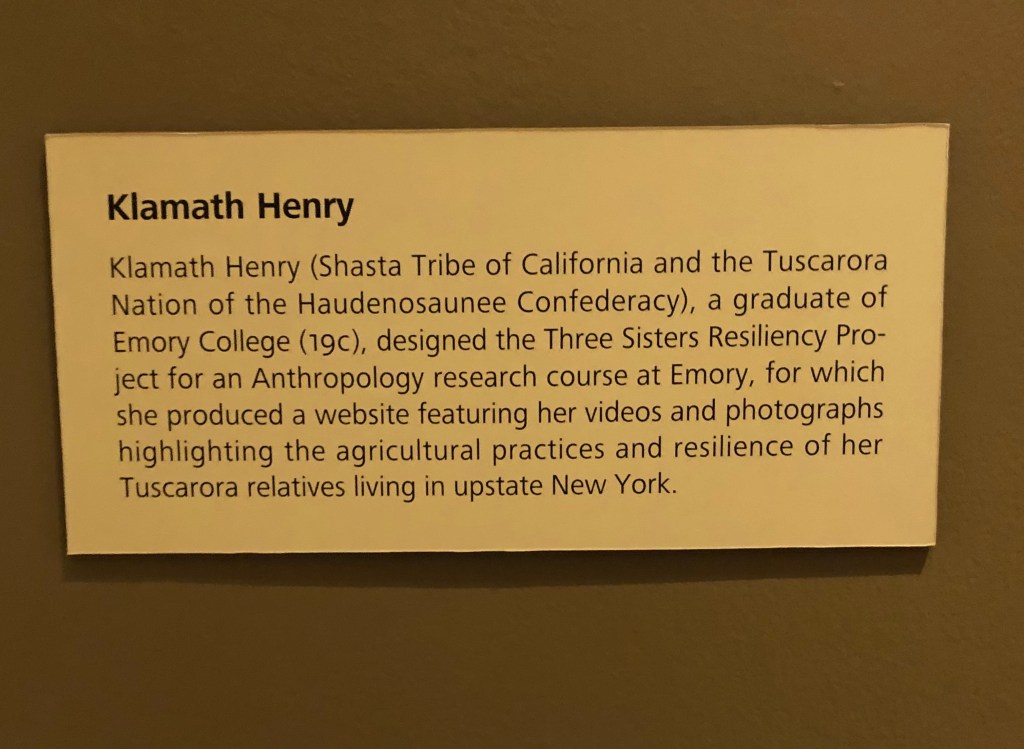
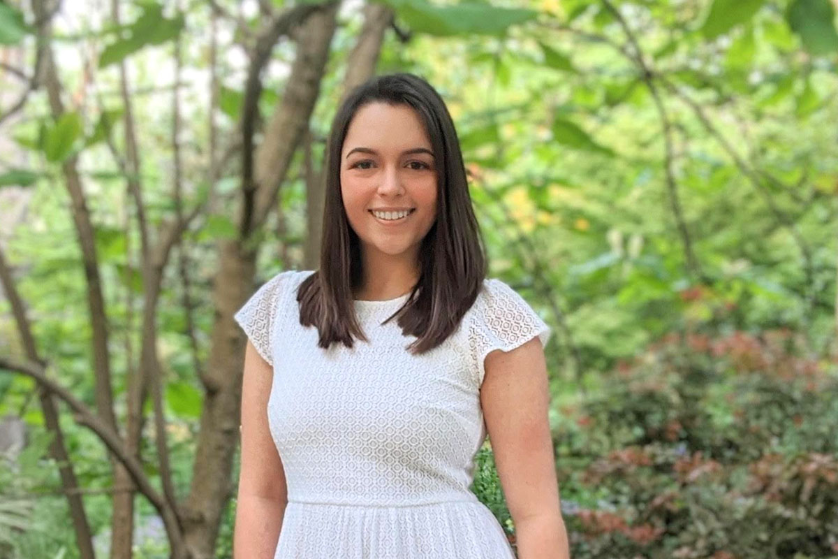
Klamath Henry featured in Carlos Museum wing for Art of the Americas: 3/SISTERS/RESILIENCY/PROJECT

One of our undergraduate students, Klamath Henry, has her work featured in the wing for Art of the Americas within the Carlos Museum. A touch screen there connects to 3 / S I S T E R S / R E S I L I E N C Y / P R O J E C T which was developed in Fall 2017 as part of an project for an independent research course taught by Dr. Debra Vidali. This project presents photography, poetry, and ethnographic documentation of Tuscarora Nation resiliency and relations to land.

Please take the time to visit this outstanding project and congratulations to Klamath Henry!

Graduate Sophie Joseph and Professor John Lindo reveal results of genomic study of ancient Andeans.

The Lindo lab specializes in mapping little-explored human lineages of the Americas. 

Previously published research found evidence of the tuberculosis bacterium in the skeletal material of 1,400-year-old Andean mummies, contradicting some theories that TB did not exist in South America until the arrival of Europeans 500 years ago. 

The current paper provides the first evidence for a human immune-system response to TB in ancient Andeans and gives clues to when and how their genomes may have adapted to that exposure.

Among the strongest signals detected were for biomarkers that are switched on in modern humans during an active TB infection. The researchers modeled the timing of selection for several of the genes involved in the TB-response pathways. Although they were not as strong as for exposure to TB, some signals were also detected for biomarkers related to adaptation to hypoxia, or low levels of oxygen in the blood that result from living at high altitude.

“Human-pathogen co-evolution is an understudied area that has a huge bearing on modern-day public health,” Sophie Joseph says. “Understanding how pathogens and humans have been linked and affecting each other over time may give insights into novel treatments for any number of infectious diseases.”

Read the full article here.

Yulia Chuvileva, PhD Alumna in Anthropology, and co-authors present their report on Selling Industrial Gallina Criolla Products in Guatemala.

“Selling Industrial ‘Gallina Criolla’ Products in Guatemala” details these new
corporate marketing tactics of competing with gallina criolla economies of
indgenous and peasant peoples. The report begins by summarizing the latest
science on the economic, ecological, social, nutritional, and taste differences
between gallina criolla and industrial chicken. It shows that the gallinas criollas
that emerge from campesina systems of production are different animals than
the industrial chickens that emerge from industrial systems of production. The
methods of rearing involved, the ecological and economic functions the birds
perform, and the nutritional value and taste of the chicken meat from the two
systems are not the same. At the same time, while gallina criolla production
is one part of agroecological systems that tend towards diversity, industrial
production of commercial chickens tends towards homogeneity.

Read the full report here.

Lori Jahnke awarded grant for Digital Archives and Indigenous Afterlives of Scientific Objects project.

Lori Jahnke, the Department of Anthropology librarian, and her colleagues at the New Jersey Institute of Technology, University of Iowa, and researchers at Fiocruz will share a three-year grant from the National Science Foundation aimed at responsible management of scientific collections created under unequal power dynamics. Jahnke and her colleagues plan to establish and test a methodology for collaborative, community-based work to document and understand subjects’ experience of scientific research and the afterlives of scientific objects that are produced. The project will help researchers reevaluate assumptions about data collection, their methodologies, intellectual property and knowledge production.

Read more about the research here.

Marcela Benítez is awarded AI.Humanity Seed Grant for AI Forest: Cognition in the Wild proposal.

Marcela Benítez (Emory University, Emory College of Arts and Sciences, Department of Anthropology) and Jacob Abernethy (Georgia Tech, School of Computer Science) were recipients of the AI.Humanity Seed Grant Program. They were awarded $100,000 in funding towards their proposal to develop and implement “smart” testing stations using artificial intelligence (AI) for long-term cognitive assessment and monitoring of wild capuchin monkeys at the Toboga Forest Reserve in Costa Rica.

Anthropology graduate students, SJ Dillon, is awarded NSF GRFP

SJ Dillon has been awarded the National Science Foundation’s Graduate Research Fellowship for their dissertation research into gender dysphoria. They will will provide an ethnographic account of a diverse group of trans communities in contemporary Atlanta, Georgia, and will compare discourses on gender dysphoria in national medical and state-level legal discourses to that ethnographic data. 

John Lindo publishes research on ancient DNA, aiding our comprehension of migration patterns in South America before the arrival of Europeans

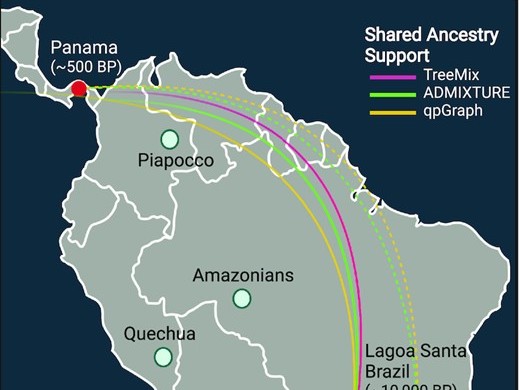
The research found different and previously undetected ancestry in a man and a woman dating back 800 and 1,500 years, both from an archeological site in eastern Uruguay. This supports the theory of separate migrations from North America into different areas in South America. “We’ve now provided genetic evidence that this theory may be correct,” Lindo tells Phys.org.

Dr. Lindo published The genomic prehistory of the Indigenous peoples of Uruguay in PNAS Nexus, Co-authors are Roseirys De La Rosa, Andre L C d Santos, Mónica Sans, Michael DeGiorgio, and Gonzalo Figueiro.