In a recent publication in the journal Antiquity, Justin Pargeter (a Postdoctoral researcher with Emory University’s Anthropology Department) argues the motivations of prehistoric hunter-gatherers for selecting particular rocks for toolmaking are often explained in too rigidly functional or symbolic terms. By examining the exploitation of crystal quartz at two archaeological sites (Ntloana Tšoana and Sehonghong) in Lesotho, southern Africa, he and his co-author Jamie Hampson (University of Exeter) reveal that stone tool production required a form of engagement unique to crystal quartz’s specific properties (including possibly quartz crystal’s piezoelectric effects). The prefered use of quartz crystals—irrespective of the availability of other rocks for tool production—demonstrates agency and variability in the prehistoric technologies.

Dr. Dietrich Stout is an experimental archeologist at the department of Anthropology where he researches connections between prehistoric stone tool-making, known as knapping, and the human brain. He has set up an online experiment in collaboration with Robert Rein at the German Sport University Cologne. Participants are asked to spend 10 minutes of their time to help deepen our understanding of the relationship between the visual-spatial skills used in knapping and areas of the brain that are involved in language processing. Dr. Stout is hoping to establish whether participants can differentiate size the of stone flakes removed during knapping, and how novice knappers fare in comparison to experts.
Read more about this on eScienceCommons and Dr. Stout’s website.
Dr. Little participated in the Happiness and Well-being Project based at Saint Luis University along with over 150 other researchers from 20 nation and spanning multiple fields. The Chronicle Article spotlighted the work done by Dr. Little in collaboration with Workneh Negatu (Agricultural Economics, Addis Ababa University) and Mark Risjord (Philosophy, Emory University), which focused on life satisfaction and well-being in northern Kenya and Ethiopia.
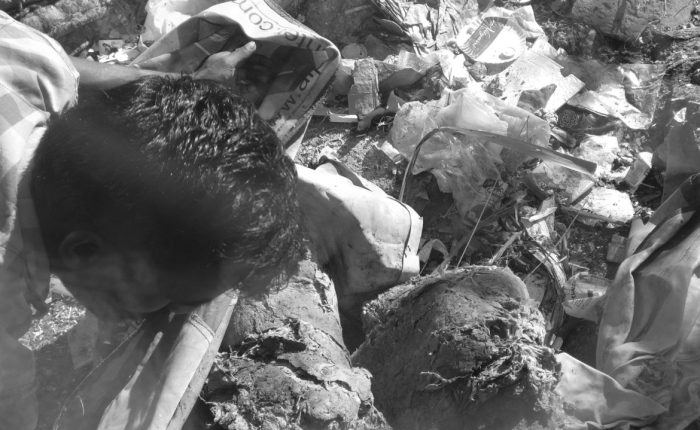
His contribution published on the Culture and Agriculture section of the American Anthropological Association explores the role our mother tongues play in wasting and sharing food. It reflects on morning municipal sweeping routes and daily garbage hauls in Bangalore, India, occasions when residents interact with sanitation workers by discarding food and sharing leftovers.
“How do our tongues–organs of speech and taste–weave charity into promiscuous expenditure? How might they archive the embodiment and routinization of power?”
Shreyas Sreenath is a PhD candidate in the Department of Anthropology.
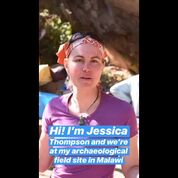
Scienceseen featured Dr. Thompson’s work in pictures and video, giving a fascinating view into her field work in Malawi. The full story can be found on Instagram.
EMORY UNIVERSITY
Assistant Professor, Tenure-Track
Location: Georgia
Salary: Open
Type: Full Time – Entry
Required Education: Doctorate
The Department of Anthropology and the Institute for Quantitative Theory and Methods at Emory University invite applications for a joint tenure-track assistant professor position, with tenure home in Anthropology. We seek a scholar with an active anthropological research program addressing core issues in biological and/or cultural evolution, using the tools of computational biology with application to empirical datasets. Candidates must have a doctoral degree, an excellent research record, and a demonstrated commitment to teaching at the undergraduate and graduate levels. Qualified candidates will be able to teach advanced statistics courses and introductory courses in Anthropology. Ability to interact effectively with faculty in two broadly inclusive departments is important.
Applications should include a curriculum vita, a research statement, a teaching statement, and complete contact information for three references. The Department of Anthropology, Emory College and Emory University embrace diversity and seek candidates who will participate in a climate that attracts students of all ethnicities, races, nationalities, and genders. In a separate statement, please reflect upon your experience and vision regarding the teaching and mentorship of students from diverse backgrounds.
Applications will be accepted through November 9, 2018. To apply for this position, please visit apply.interfolio.com/53932 and submit your materials free of charge through Interfolio.
Emory University is an equal employment opportunity and affirmative action employer. Women, minorities, people with disabilities and veterans are strongly encouraged to apply.
While it has long been believed that humans evolved from one population in Africa, genetic evidence is pointing towards several interlinked groups in Africa instead. Dr. Jessica Thompson collaborated in an article for the Journal Trends in Ecology and Evolution along with 22 other authors. eScienceCommons interviewed Dr. Thompson about her research.
“Science Seen” is dedicated to showcasing science at Emory and giving a behind-the-scenes look at how science and research is done. Science Seen visited Dietrich Stout’s lab to learn more about how researchers there are recreating the past to better understand the human mind. Watch the Video on Facebook and learn more about Science Seen on Instagram.
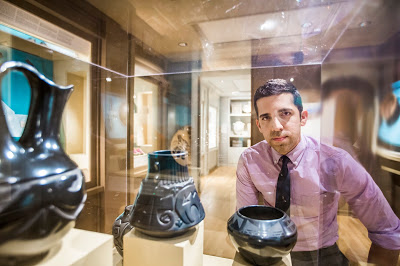
John Lindo’s publication in The American Journal of Human Genetics is featured in Emory News. Dr. Lindo specializes in the molecular and computational aspects of Ancient DNA research. He presents his work on the Native American Tsimshian tribe and their population changes based on DNA research.
“I want to help Native American tribes to reclaim knowledge of their very ancient evolutionary histories — histories that have been largely wiped away because of colonialism,” says Emory geneticist John Lindo in the Emory News article.
Photo by Kay Hinton, Emory Photo/Video.