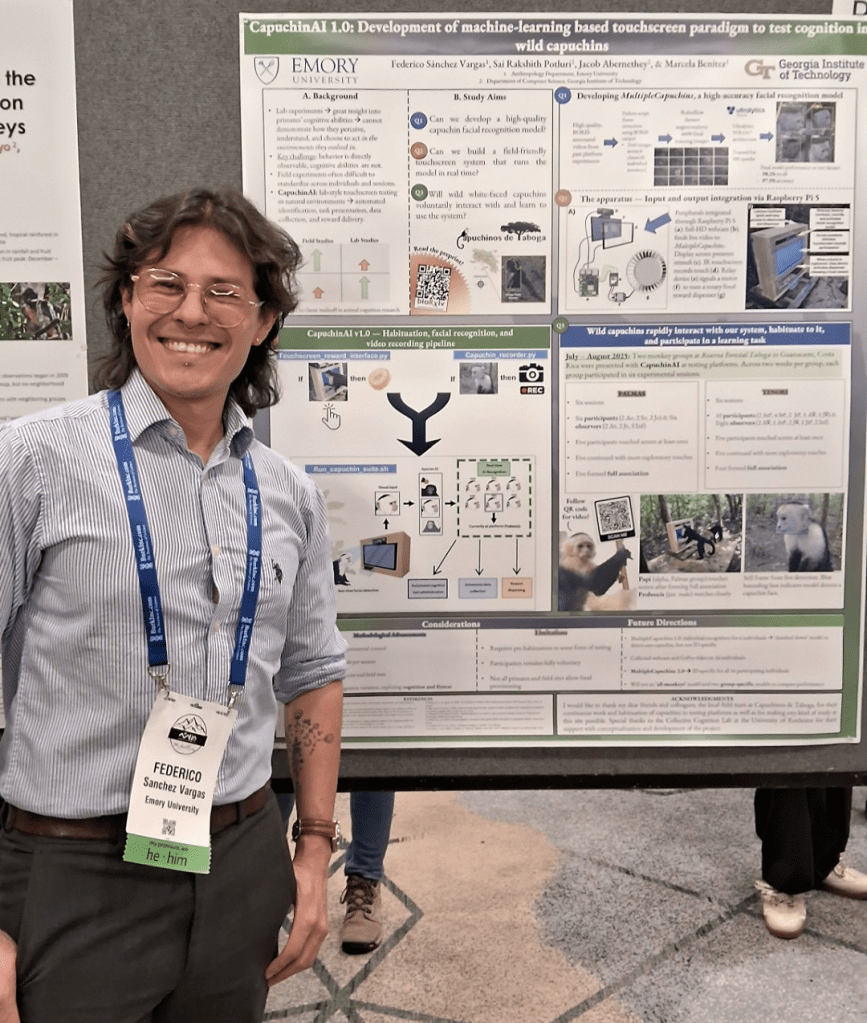
Anthropology graduate student Federico Sánchez Vargas has won the Outstanding Student Presentation Award for his poster on CapuchinAI at the 2026 American Association of Biological Anthropologist conference in Denver. The AABA has long recognized the important contributions made to our discipline by students. Their work reflects the promise and future of our field. This award recognizes the important contributions students make to the field and celebrates innovative, rigorous research by emerging scholars.
Emory faculty Kristin Phillips (left), associate professor of anthropology, and Jola Ajibade, associate professor of environmental sciences, are co-investigators on a three-year project to study the impact of the rapid growth of data centers.
— Photos courtesy of Philips and Ajibade.
The massive data centers needed to run AI systems are rapidly altering geographical landscapes and communities. That’s especially true in the U.S. South, where many states are dominated by large, investor-owned utilities and land and other natural resources are still relatively available.
“Data centers are proliferating alongside the explosive growth of cloud computing and AI technologies,” says Kristin Phillips, associate professor of anthropology at Emory University. “People are raising concerns about who is reaping the benefits of these facilities and who is bearing the economic and environmental costs.”
Phillips, a sociocultural anthropologist who studies the social context of energy and infrastructure, is digging deeply into these questions and their implications for the U.S. South, funded by a $1 million grant from the Alfred P. Sloan Foundation.
Her co-principal investigators on the grant are Jola Ajibade, Emory associate professor of environmental sciences, and Gabe Schwartzman, assistant professor of geography and sustainability at the University of Tennessee, Knoxville.
Cathy Kunkel, from the Institute for Energy Economics and Financial Analysis, and Nikki Luke, a human geographer at the University of Tennessee, Knoxville, will serve as consultants to the co-investigators.
The three-year project will research the current and potential effects of data centers on electricity costs for individual ratepayers, structural changes to how energy is supplied and consumed, and issues of environmental and social justice. The researchers will conduct case studies for three states: Georgia, Virginia and Tennessee.
They will combine qualitative and quantitative methods, drawing data from interviews, surveys, official documents, cost analyses, focus groups and ethnography to consider the perspectives of utilities, state and local officials, workers, community organizations and residents.
Existing and planned data center sites will be mapped and made available online. These maps will be overlaid with demographic data on the surrounding communities.
The researchers will also develop a comparative analysis of the regulatory and policy landscapes across the three states to identify best practices. The different stakeholders will be actively engaged in all aspects of the work, from project scoping to implementing research plans and disseminating the results.
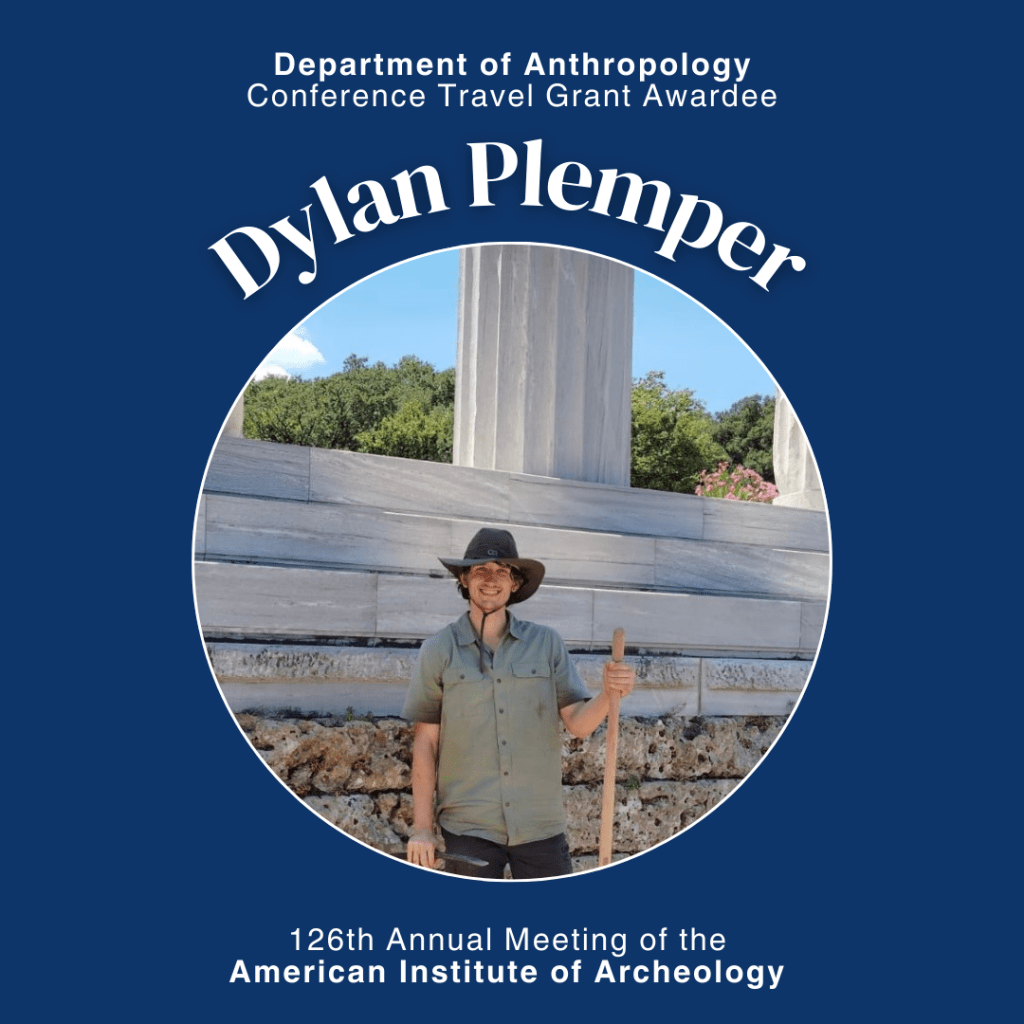
Dylan Plemper, Anthropology major, has been awarded a $500 travel grant to attend meetings of the American Institute of Archaeology. Their advisor is Professor Petra Creamer from the Department of Middle Eastern and South Asian Studies (MESAS).
Congratulations to Dylan for this amazing opportunity!
Emory College of Arts and Sciences is set to launch a new Center for Native American and Indigenous Studies this fall to advance and inspire research, scholarship, teaching and learning rooted in and related to Indigenous studies.
In conjunction with the Muscogee (Creek) Nation, and through seven years of ongoing work by an interdisciplinary group involving dozens of faculty, students and staff including Dr. Craig Womack (emeritus, English), Dr. Malinda Maynor Lowery (History), Associate Dean Beth Michel (OUA), Anthropology alumna Klamath Henry (C19), current Anthropology seniors Iliyah Bruffett (C23) and Sierra Talavera Brown (C23), and Anthropology faculty member Dr. Debra Vidali, Emory University is launching a Center for Native and Indigenous Studies in Fall 2023.
In 2018, then UK Prime Minister Theresa May said, “Loneliness is one of the greatest public health challenges of our time,” and appointed the country’s first minister for loneliness. U.S. Surgeon General Vivek Murthy called loneliness a “growing health epidemic,” stating that social isolation is “associated with a reduction in lifespan similar to that caused by smoking 15 cigarettes a day.”
What do the following have in common? Rising rates of social anxiety and social withdrawal, alarming rates of suicide (up 51% among teenage girls in the U.S. in just a two-year period from 2019-2021, and up over 300% over a ten-year period), the increasing number of mass shootings, the epidemic of burnout in healthcare and other sectors, eating disorders. All too often, at the heart of each of these is a lack of social connection and the feeling of being loved, accepted, and understood. This is loneliness. Education is the most powerful tool we have for bringing about this change. Recent research in psychology and neuroscience shows that young children and even infants have a natural orientation towards kindness and helping over cruelty.
In 2002, armed Hindu mobs attacked Muslims in broad daylight in the west Indian state of Gujarat. The pogrom, which was widely seen over television, left over one thousand dead. In Composing Violence, Moyukh Chatterjee examines how highly visible political violence against minorities acts as a catalyst for radical changes in law, public culture, and power. He shows that, far from being quashed through its exposure by activists, media and politicians, state-sanctioned anti-Muslim violence set the stage for transforming India into a Hindu supremacist state. The state and civil society’s responses to the violence, Chatterjee contends, reveal the constitutive features of modern democracy in which riots and pogroms are techniques to produce a form of society based on a killable minority and a triumphant majority. Focusing on courtroom procedures, police archives, legal activism, and mainstream media coverage, Chatterjee theorizes violence as a form of governance that creates minority populations. By tracing the composition of anti-Muslim violence and the legal structures that transform that violence into the making of minorities and majorities, Chatterjee demonstrates that violence is intrinsic to liberal democracy.
“In this powerful book, Moyukh Chatterjee gives us a brief, elegant, and novel way of thinking about violence.” – Nancy Rose Hunt, author of Nervous State: Violence, Remedies, and Reverie in Colonial Congo.
Available here! Use coupon code E23CHTTR to save 30% when you order from www.dukeupress.edu.
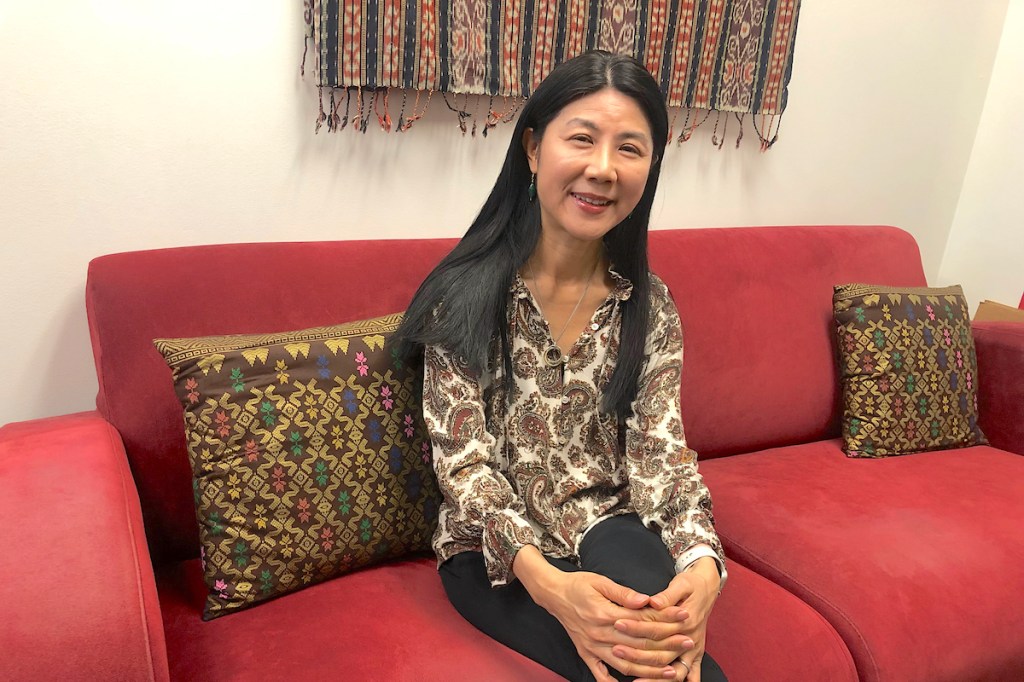
Chikako Ozawa-de Silva graduated from Sophia University in Tokyo before heading to Oxford University for a PhD in social and cultural anthropology. Research fellowships took her to Harvard and the University of Chicago before she joined Emory in 2003.
Her research focuses on the impacts of culture on well-being, including how people experience and respond to suffering. Ozawa-de Silva’s most recent book is titled “The Anatomy of Loneliness: Suicide, Social Connection, and the Search for Relational Meaning in Contemporary Japan.”
Published by the University of California Press, the book won the Society for East Asian Anthropology’s 2022 Francis Hsu Book Prize. The prize committee called the work “poignant, richly ethnographic and an exemplary instance of a book that really speaks beyond our field…Ozawa-de Silva writes about suicide and loneliness in Japan in ways that speak to wider global trends while giving us some hint at potentially better ways to live.”
“The Anatomy of Loneliness” also received the 2022 Victor Turner Prize in Ethnographic Writing honorable mention, presented by the Society for Humanistic Anthropology. “This book is a jarring, empathic, and even paradoxical diagnosis of emerging collective social structures that make people feel alone,” the prize committee wrote. “Along the way, readers are introduced to a brave and novel vision for what an inclusive society might mean.”
The Francis L. K. Hsu Prize is given to the book that was judged to have made the most significant contribution to the field of Anthropology of East Asia and is awarded by the American Anthropological Association’s Society for East Asian Anthropology. In The Anatomy of Loneliness, Ozawa-de Silva gracefully threads the needle of writing for a non-specialist audience while adding to conversations about loneliness, suicide, and social connection in the anthropology of East Asia. Moreover, she writes about the particularities of a social phenomenon in Japan in ways that speak to global experiences of loneliness as a part of the human condition, but one exacerbated by the structures of modern life and neoliberal policies. To do so, the book draws together current research in anthropology, sociology, psychology, and neuroscience/developmental biology, to theorize the anatomy of loneliness as both individual and social. The chapters chart Ozawa-de Silva’s research journey from a study of the dramatic increase in suicides in Japan beginning in 1998, to her discovery that a lack of social connection, loneliness, and a sense of meaning in life better reflected the stories she encountered than the assumed economic or mental health causes. In order to study suicide ethnographically, the book analyses first, second, and third person accounts seen through the phenomenon of suicide websites, the commodification of intimacy, the perceptions of college students, and the 2011 natural and nuclear disasters. The book ends with a timely focus on the communal loneliness of areas forgotten in post-Fukushima recovery initiatives and emerging examples of their resilience through community. Thus, Ozawa-de Silva writes about suicide and loneliness in Japan in ways that speak to wider global trends while giving us some hint at potentially better ways to live today. The committee also found Chikako’s book to be “poignant, richly ethnographic, and an exemplary instance of a book that really speaks beyond our field.”
The Victor Turner Prize in Ethnographic Writing is an annual juried book award by the American Anthropological Association’s Society for Humanistic Anthropology (SHA). The prize committee “seeks graceful, accessible ethnographic writing which deeply explores its subject and contributes in innovative and engaging ways to the genre(s) of ethnography and the field of humanistic (and/or post-humanistic) anthropology.” Chikako Ozawa-de Silva’s The Anatomy of Loneliness humanistically explores issues of human biology, and it analytically transforms loneliness from an individual state of being into a societal predicament. This book is a jarring, empathetic, and even paradoxical diagnosis of emerging collective social structures that make people feel alone. Along the way, readers are introduced to a brave and novel vision for what an inclusive society might mean. The book’s subject matter, from mental health to suicide, is challenging — but Ozawa-de Silva shows us how to rigorously write these topics in ways that cultivate inclusive engagement rather than reproduce the senses of alienation the book explores. The committee also felt that The Anatomy of Loneliness offers a truly unique, distinguished, and even experimental model of accessibility. This book is lucidly written. it is also a text that creatively and transparently brings the reader alongside the author in all her intellectual premises, all her conceptual inspirations, and every one of her turns of thought.
Watch Professor Ozawa-de Silva read the first 5-minutes of her book here.
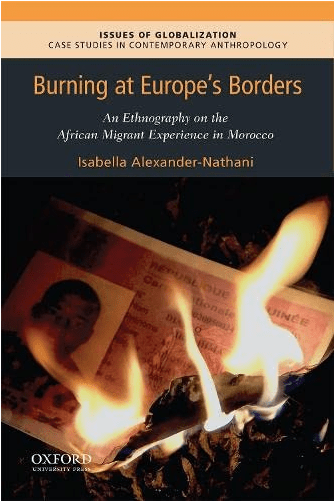
The Association for Africanist Anthropology has awarded Dr. Isabella Alexander the 2022 Elliott P. Skinner Book Award for her book Burning at Europe’s Borders.
This prize is awarded to the book that “best furthers both the global community of Africanist scholars and the wider interests of the African continent, with special consideration given to works drawing upon extensive research in Africa and advancing new methodologies for anthropological fieldwork in Africa.”
“It’s phenomenal that Denisovan ancestry made it all the way to South America,” says John Lindo, a co-corresponding author of the paper and an anthropologist at Emory who specializes in ancient DNA analysis, “The admixture must have occurred a long time before, perhaps 40,000 years ago.”
Lindo also states the fact that the Denisovan lineage persisted and its genetic signal made it into an ancient individual from Uruguay that is only 1,500 years old suggests that it was a large admixture event between a population of humans and Denisovans.





 EMORY ANTHROPOLOGY