Jennifer Mascaro finds that a toddler’s gender influences the brain responses and behavior of fathers

Jennifer Mascaro (PhD, Emory Anthropology) published a study in the journal Behavioral Neuroscience based on work she did as a postdoctoral fellow with Professor James Rilling.

The study found differences in behavior fathers showed their children, depending on the child’s gender, from response time to commonly used terminology. The split between fathers of sons and fathers of daughters was also present during brain scans employed in the study. Faced with different pictures, fathers of daughters reacted strongly to pictures of their daughters with happy expressions, while fathers of sons’ strongest reactions were to pictures of their child showing a neutral expression. (eScienceCommons)
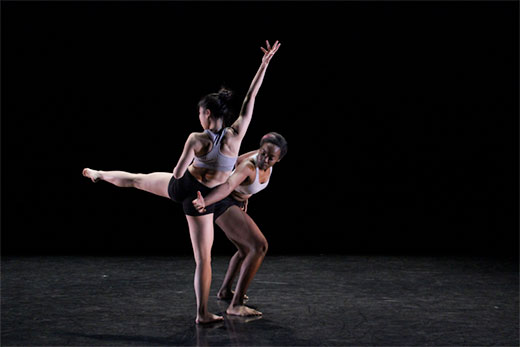
Anthropology graduate Jessica Bertram receives Alan Rackoff Prize

story_main.jpg

Anthropology graduate Jessica Bertram (BA, Anthropology and Human Biology/Dance & Movement Studies) receives Alan Rackoff Prize for her dance project “She fell, but felt no fear.”

Bertram based her project on research done in the Rose Manuscripts, Archives, and Rare Book Library at Emory. “I collected a lot of African American materials such as photos, scrapbooks, newspaper clippings, books, poems, obituaries and music selections ranging from the late 1800s to the late 1900s.”

She was also selected to perform at the American College Dance Association Conference with Cherry Fung. For more, visit the Emory News Center.

(Photo by Lauren Lindeen)

Congratulations to this year’s award winners and honor students!

Congratulations to this years award winners and honor students!

Anthropology Undergraduate Awards

Outstanding Junior: Deandre Miles

Outstanding Senior: Virginia Spinks

Marjorie Shostak Prize for Excellence and Humanity in Ethnographic Writing: Cameron Barker

Anthropology Graduate Awards:

George Armelagos Award for Excellence in Teaching by a Graduate Student: Whitney Easton and Daniel Thompson

Anthopology Honor Students

Cameron Barker

Yen Doan

Michelle Kagei

Katherine Nerses

Virginia Spinks

Dr. Jessica Thompson on Homo naledi

In a recent eLife article, Dr. Jessica Thompson discusses how the newly discovered Homo naledi creates more questions than it answers in terms of the evolution of humans. The new discovery certainly illustrates that the evolution of the modern human did not occur in the straight line that we once thought.

This article also made news in the Guardian.


Dr. Debra Vidali at The Sound of Memory Symposium in London

Dr. Debra Spitulnik Vidali and Dr. Kwame Phillips (PhD, Emory Anthropology, 2014) exhibited their ethnographic sound art project entitled “Kabusha Radio Remix: Your Questions Answered by Pioneering Zambian Talk Show Host David Yumba (1923­‐1990)” in London on April 23-24 as part of The Sound of Memory Symposium.

The Sound of Memory Symposium explores creative works and ideas situated at the interface of composers working in acoustic ecologies and artists working within social ecologies, where the primary engagement is a form of sonic ethnography. The overarching theme is an exploration of how individual and cultural memory resonates in the shaping of social space. The Symposium explores the broad domain of acoustic ecologies and soundscape’s engagement in place. The symposium is co-hosted by the Sound-Image-Space Research Centre (School of Music and Fine Art, University of Kent), the School of Sound, and Goldsmiths, University of London.

Dr. Isabella Alexander: “The freedom to travel isn’t a basic human right. It depends on where you’re born.”

Anthropologist, Writer, Documentary Filmmaker, and Visiting Assistant Professor in Emory’s Anthropology Department, Dr. Isabella Alexander (PhD, Emory, 2016) published an article on GlobalPost Investigations highlighting problems in the migration crisis.

Professor Todd Preuss featured on NPR

An article featured on NPR discusses the complications that arise when rodents are commonly used to test medications intended for humans: namely, a disappointingly high failure rate once medications are tested on human subjects.

Todd Preuss, an anthropologist at the Yerkes National Primate Research Center at Emory University and Associated Professor of Anthropology, indicates that rats were initially studied to learn about rats. At some point they transitioned to “prototypical mammals.” Dr. Preuss points out that rodents have not only developed quite differently from humans, but the specific test subjects can also be described as lacking genetic diversity.