
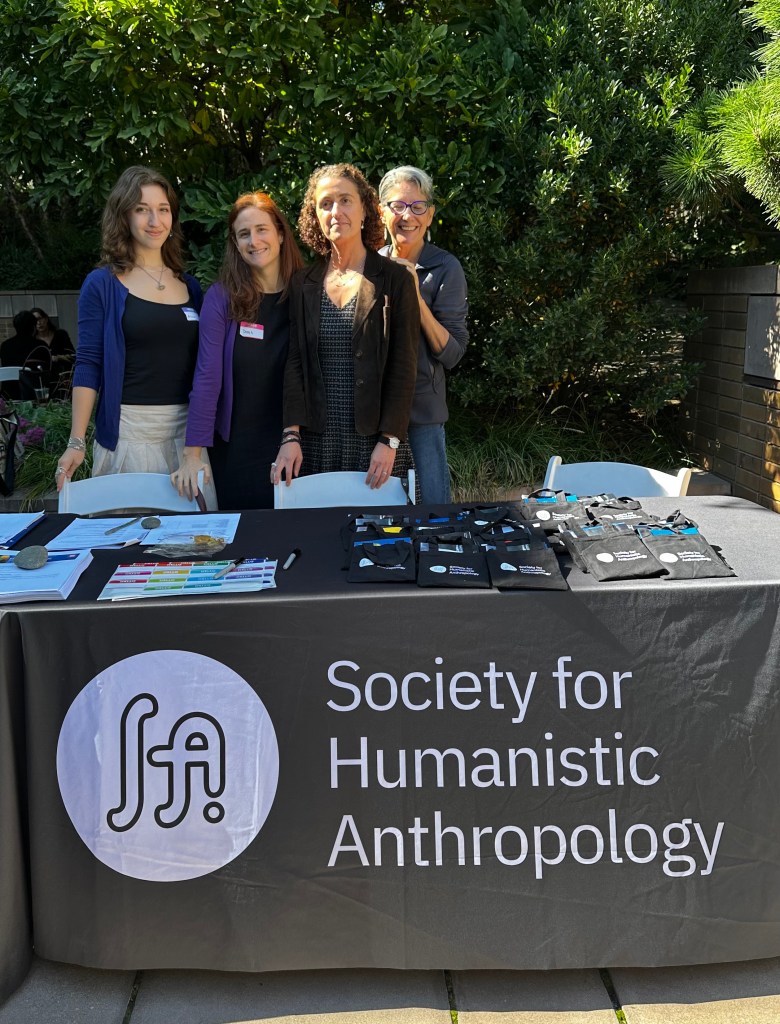
Emory Anthropology faculty Debra Vidali and Anthropology undergraduate Alice Stern (C ‘28) were selected to open the annual Society for Humanistic Anthropology (SHA) Fall Conference on Oct 2, 2026 with an immersive performance-based experience, based on Vidali’s research in ethnographic theater-making. In addition, Emory Anthropology PhD alumnae, Joanna Davidson (LGS ’07) and Dinah Hannaford (LGS ‘14), were selected to close the conference, with a roundtable on the ethics and enduring resonances of fieldwork friendships.
The SHA conference theme was “Choosing Each Other: Multimodal Ethnographies of Friendship as Community Care.” The program is here.
From the SHA Conference program chair, Amina Tawasil:
We begin the conference on Friday at 12:30 PM and open with an immersive roundtable that sets the affective and embodied tone for the entire weekend. Debra Vidali (Emory University), joined by Ash Marinaccio (Docbloc), Jules Downum (Understory), and Alice Stern (Emory University), brings together a multigenerational group of anthropologists, choreographers, dancers, and theater directors to explore how processes of theater-making and performance creation build communities of friendship, connection, and care. This session may transform into a participatory experience, inviting attendees into rehearsal exercises that activate relations of connection and care firsthand. It is a fitting way to step into two days together.
We close Saturday afternoon with a roundtable that poses a critical question at the heart of ethnographic practice. Joanna Davidson (Boston University), alongside Dinah Hannaford (University of Houston), Yana Stainova (McMaster University), and Ellen Foley (Clark University), asks why the friendships that sustain our long-term fieldwork so often remain absent from our published pages. Drawing on enduring relationships forged in West Africa and Latin America, the presenters scrutinize the ethics, trepidation, and expressive limitations that have kept these vital bonds off the page, and they ask whether multimodal ethnography might offer more conducive possibilities.

