Congratulations to our 2024 Anthropology student award winners!

2024 Anthropology Student Awards

The Anthropology Department is pleased to announce our 2024 student award winners! Undergraduate awards were presented at our annual Honors and Awards Ceremony on Friday, April 26th. For award descriptions and past winners, visit our Departmental Awards webpage.  We are so proud of our many impressive students.  Please join us in congratulating them!

Outstanding Senior Award: 

  • Eric Li
  • Ezra Packard
  • Elizabeth Whiteside

Outstanding Junior Award: 

  • Krishna Sanaka

Marjorie Shostak Award for Excellence and Humanity in Ethnography:

  • AJ Jones  for her dissertation “Performing the Missing X: Sex, Gender, Disability, and Ambivalent Identity Politics in the United States”, advised by Chikako Ozawa-de Silva and nominated by Bruce Knauft.
  • Sasha Tycko for her photographic installation “Ways of the Atlanta Forest”, advised by Anna Grimshaw.
  • Galya Fischer for her Capstone project “Side by Side: An Exploration of Accessibility and Anthropological Research”, advised by Anna Grimshaw.

Trevor E. Stokol Scholarship for Undergraduate Research 2024-25:

  • Peter Attarian
  • Kaela Goldstein
  • Kevin Gunawardana
  • Sarah Jung
  • Lydia King

George Armelagos Award for Excellence in Teaching by a Graduate Student:

  • Katy Lindquist
  • Sophie Joseph

Anthropology PhD Student Sasha Tycko unveils her exhibition of photographs, “Ways of the Atlanta Forest” to the public.

The Anthropology department just celebrated the opening of “Ways of the Atlanta Forest,” an exhibition of photographs by one of our PhD candidates, Sasha Tycko (C’19). The exhibition is based on Tycko’s dissertation research, which focuses on the life of the “Atlanta forest,” the site of intense conflict over the City of Atlanta’s plan to build a police training complex known as “Cop City.” Over two years, Tycko lived and worked in the forest, using a range of media, including analogue photography, to explore how the abandoned forest landscape—formerly the site of a city prison farm and a slave plantation—motivates new articulations of history, nature, and ethics. Working with the visual language of landscape photography, Tycko’s photographs cast the landscape as a layered repository of history and imagination.

This exhibition inaugurates the Department of Anthropology’s new exhibition space, which is meant to foster dialogue across campus and stimulate debate about what might constitute an engaged anthropology.

There will be a public discussion about “Ways of the Atlanta Forest” between Sasha Tycko and Jason Francisco (Film & Media, Visual Arts) on March 19th, from 1:00pm – 2:30pm in Anthropology building room 206. All photographs are gelatin silver prints handmade by Tycko in Emory’s chemical darkroom.

Sasha Tycko also recently published an essay based on her dissertation research, “Not One Tree,” in n+1 magazine.

Anthropology Graduate Katy Lindquist (C’18) receives Klarman Fellowship in the College of Arts & Sciences at Cornell University!

Katy Lindquist, Anthropology graduate, received a 3-year Postdoctoral Associate position in the Department of Anthropology at Cornell University starting fall following her PhD completion here at Emory University in the Department of Anthropology. The Klarman Fellowship in the College of Arts & Sciences provide postdoctoral opportunities to early-career scholars conducting researching in any discipline. Recipients may conduct research in any discipline and are offered independence and enabled to devote themselves to innovative research without being constrained to specific outcomes or teaching responsibilities.

Katy Lindquist is featured on Cornell University’s website under the Current Fellows. Congratulations Katy!

Emory Anthropology Professor Debra Vidali wins international ethnographic poetry contest.

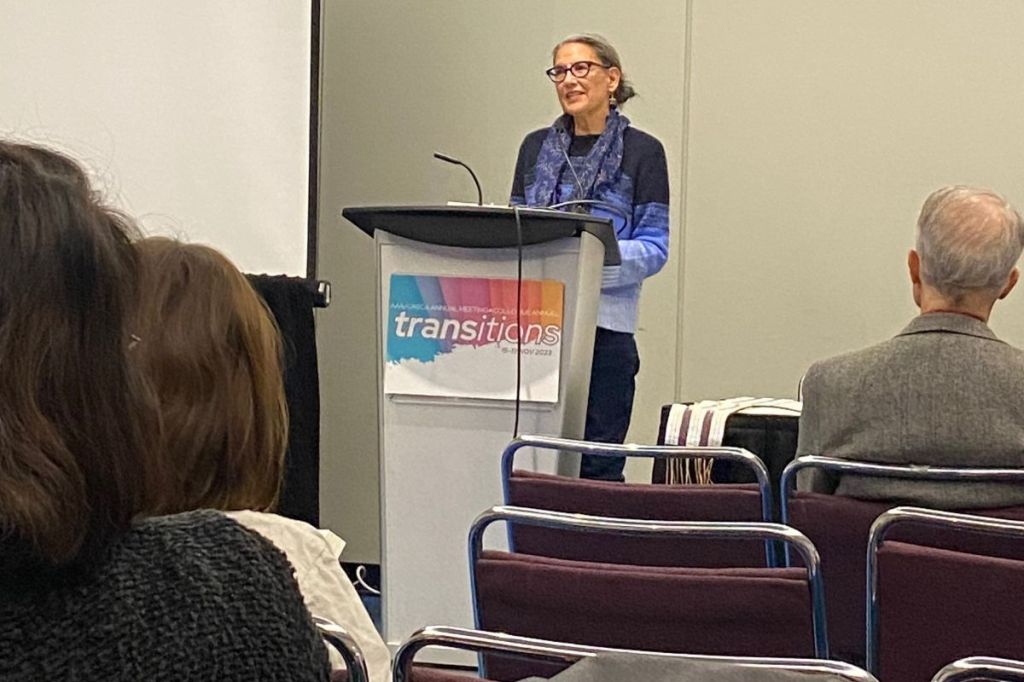
Emory University anthropologist, Professor Debra Vidali is awarded first place in the 2023 Ethnographic Poetry Competition of the American Anthropological Association’s Society for Humanistic Anthropology. Vidali, a sociocultural anthropologist whose work centers on experimental ethnography and ethnographic theater, won for a set of two experimental poems, “Two Row Repair II” and “Two Row Repair III.” The titles refer to the Two Row Wampum belt that encodes the first treaty between Europeans and Haudenosaunee, or the Iroquois Confederacy. The judges praised the connections, saying Vidali’s work “not only speaks about, but embodies, decolonial praxis in a historically anchored way.” Vidali accepted the award in person and read the poetry last month at the Society for Humanistic Anthropology’s annual award ceremony in Toronto.

She says she was motivated to write the poems after a 2022 research journey to find the original location where the Two Row agreement occurred in 1613 between Dutch and Mohawk, near the port of present-day Albany, New York. “The Two Row Wampum is a foundational treaty extending into the present. It conveys expected relations between Haudenosaunee and people of European descent to co-exist in peace, respect and friendship, and in common stewardship for all orders of life, including rivers, plants, animals and earth itself,” Vidali says.

“As a non-Indigenous person who was born and raised on Haudenosaunee lands, and whose ancestors go back to Dutch settlers in the Hudson Valley in the 1630s, I strive to honor this treaty and to communicate to others about it,” she adds. “With the set of poems, I activate and inscribe a journey of ancestral reckoning using the unique affordances of experimental ethnographic writing. It was a deep honor to receive the award, and to have it conferred on Haudenosaunee lands in Tkaronto (Toronto).”

Read the full article here!

Professor Debra Vidali’s ethnographic theater project in Toronto featured University of Minnesota Duluth blog.

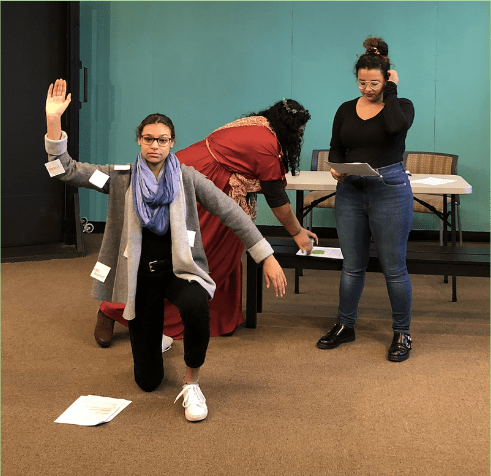
Professor Debra Vidali presented her ethnographic theater project at a meeting of the American Anthropological Association in Toronto recently in November 2023 and has been featured in a blog by Dr. Mitra Emad, the Associate Dean at the College of Arts, Humanities and Social Sciences at the University of Minnesota Duluth. Dr. Emad at this to say about Professor Vidali’s project:

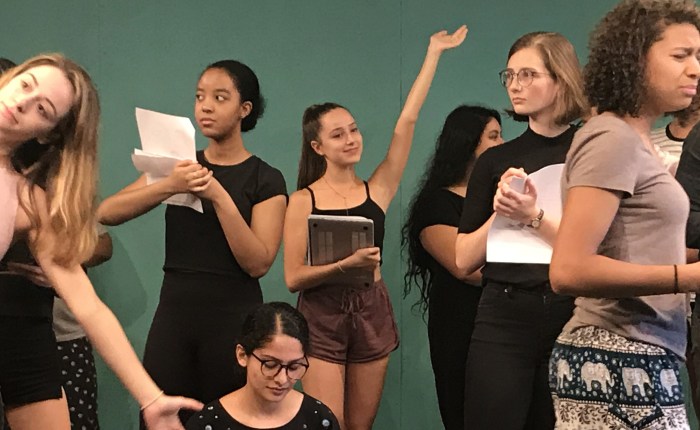
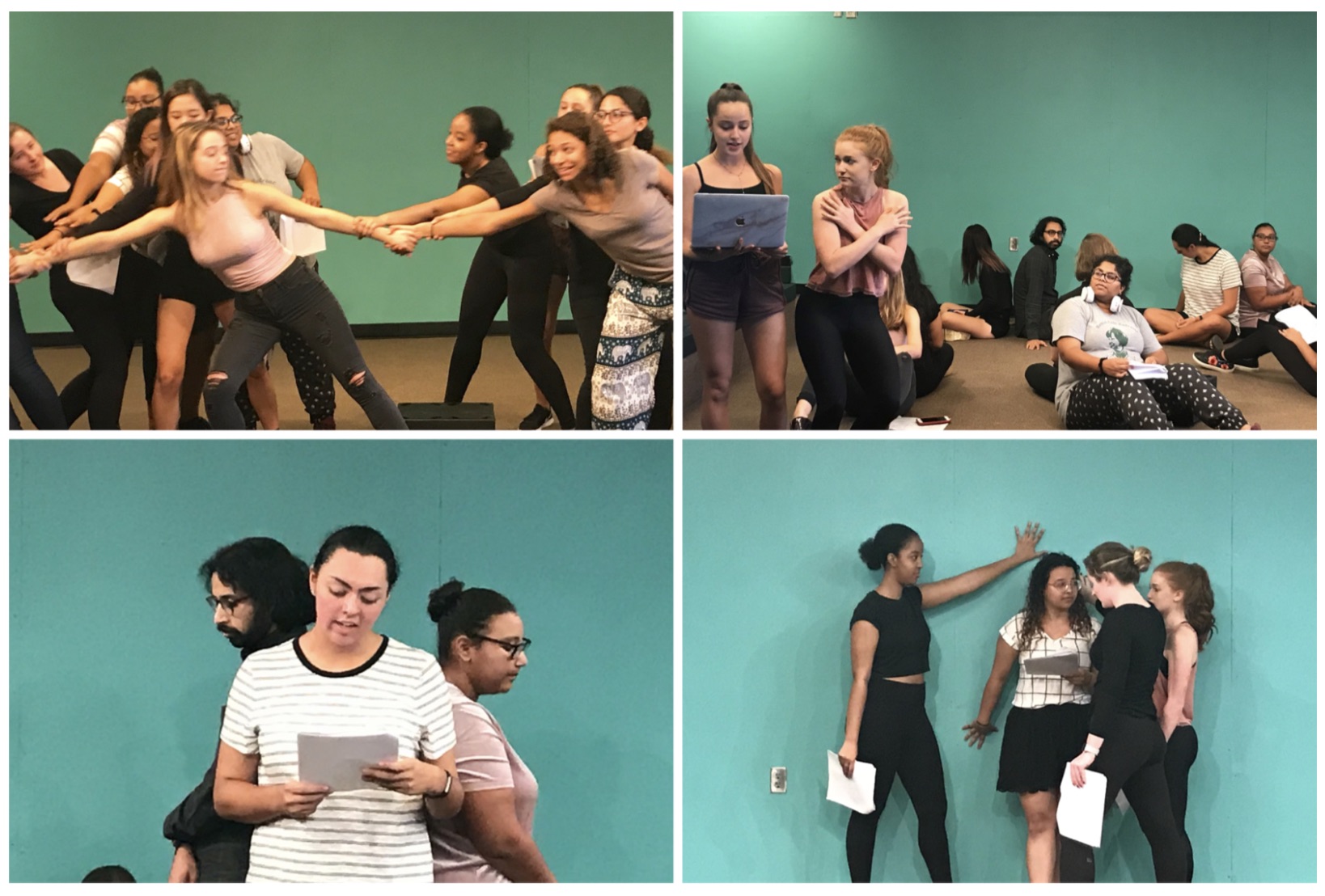
“Recently at the annual meetings of the American Anthropological Association, I attended a follow-up event to a workshop in which anthropologists explored theater making initiatives by clearing a room of furniture and embodying/acting out the text of on ethnographer’s fieldnotes. Many of them had never met before this experiment and the workshop organizer, Debra Vidali (Emory University) functioned as the group’s choreographer. Vidali managed to choreograph a quick (“moving at the speed of light”) and profound sense of belonging in a context (academic conferences) that rarely attend to the body or the flow of resilience that moves between and among the participants. Watching the re-enact and comment upon their experience at a roundtable event the next day, I was struck by how working in and through their bodies to explicate the fieldnotes quickly created a powerful and productive sense of belonging for the impromptu group.”

Read the full blog here!

Anthropology major Andrea Lopez and classmates create The Emory 1836 Project, highlighting Emory origins and history of the deportation of the Muscogee and Cherokee peoples.

The Emory 1836 Project is a dynamic digital humanities website, created by students in the Reparative History at Emory course, that re-centers the university’s origins within the historical context of the forced deportation of the Muscogee and Cherokee peoples from Georgia and the national expansion of slavery. Student archival research, place-based study, ethnographic research, and community storytelling for the Emory 1836 Project investigate how the legacies of slavery and dispossession structured institutional culture and practices from the university’s founding through the present-day. This reparative history project recognizes the active presence and contributions of Black and Indigenous peoples throughout Emory University’s history. The project is a living document that will expand as other students add to it in future semesters.

Check out the website for stories, archival documents, interview clips, and maps of significant events in the history of Emory’s main campus and Oxford campus.

This project was a product of the HIST-488RW/AMST-489: Reparative History at Emory course taught in Spring 2023 by Dr. Michael Mortimer.

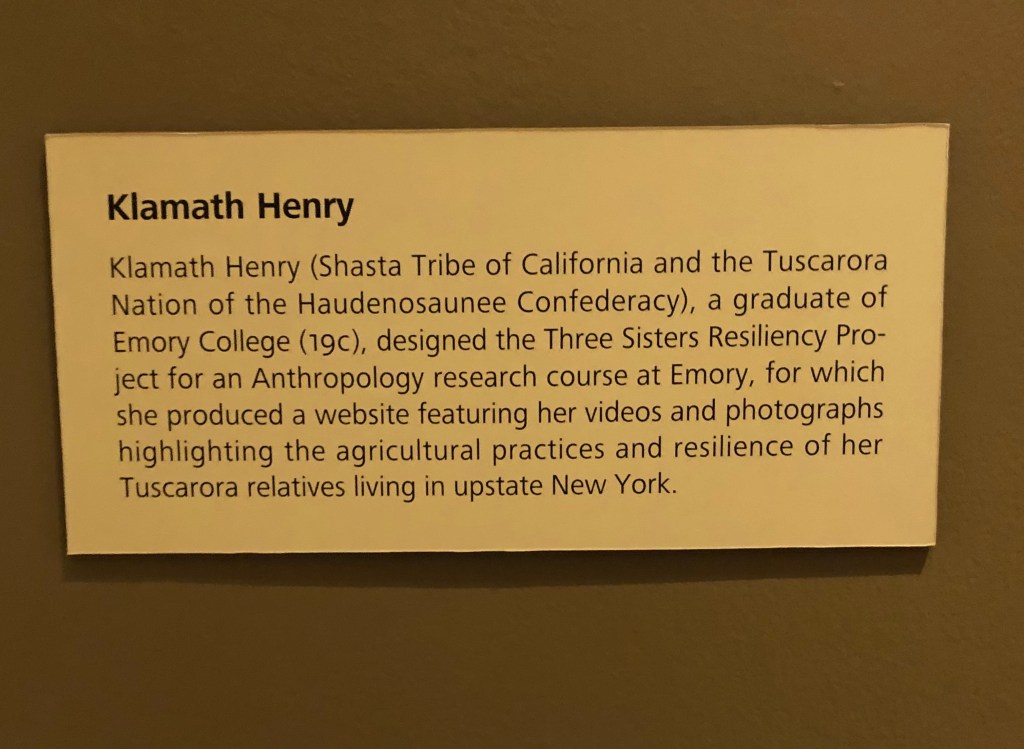
Klamath Henry featured in Carlos Museum wing for Art of the Americas: 3/SISTERS/RESILIENCY/PROJECT

One of our undergraduate students, Klamath Henry, has her work featured in the wing for Art of the Americas within the Carlos Museum. A touch screen there connects to 3 / S I S T E R S / R E S I L I E N C Y / P R O J E C T which was developed in Fall 2017 as part of an project for an independent research course taught by Dr. Debra Vidali. This project presents photography, poetry, and ethnographic documentation of Tuscarora Nation resiliency and relations to land.

Please take the time to visit this outstanding project and congratulations to Klamath Henry!

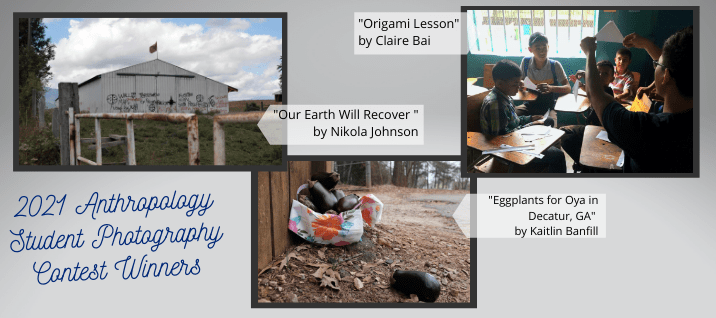
Anthropology Photo Contest Winners Announced

Congratulations to the winners of the Anthropology Photography contest!

First Prize: Amelia Howell

Dog.jpeg

Amelia is a graduating senior and an Anthropology major. This year, she wrote an honors thesis called, “Booty Hop and the Snake: Race, Gender, and Identity in an Atlanta Strip Club,” for which she also won the Undergraduate Shostak Award for Excellence and Humanity in Ethnographic Writing. The award winning photograph is called “Everything in Excess.”

Everything in Excess 

This photo is of my family’s Great Dane, Yeagar, blocking the flat screen television in our game room. Behind the dog is a wall of photos from family trips all over the world from when we were children. This photo emphasizes an aspect of the culture of wealth in the United States. Everything in this photo is in excess. The size of the dog, the size of the television, and the size of the wall covered in photographs from around the world. The irony of this image is that the excessiveness of the size and wealth in the foreground is contrasted with the images on the wall which display family trips to predominantly less affluent areas of the world in Kenya, Tanzania, Liberia, Mexico, and Israel. The wall offers a glimpse of other realities of the world while being displayed among the comfort of an upper middle class family in the U.S. This image speaks to the culture of wealth in the United States where people often display said wealth through conspicuous consumption but also through displaying mementos representing the contrast in economic status of the reality of majority of the world.


Second Prize: Aiman Mustafa
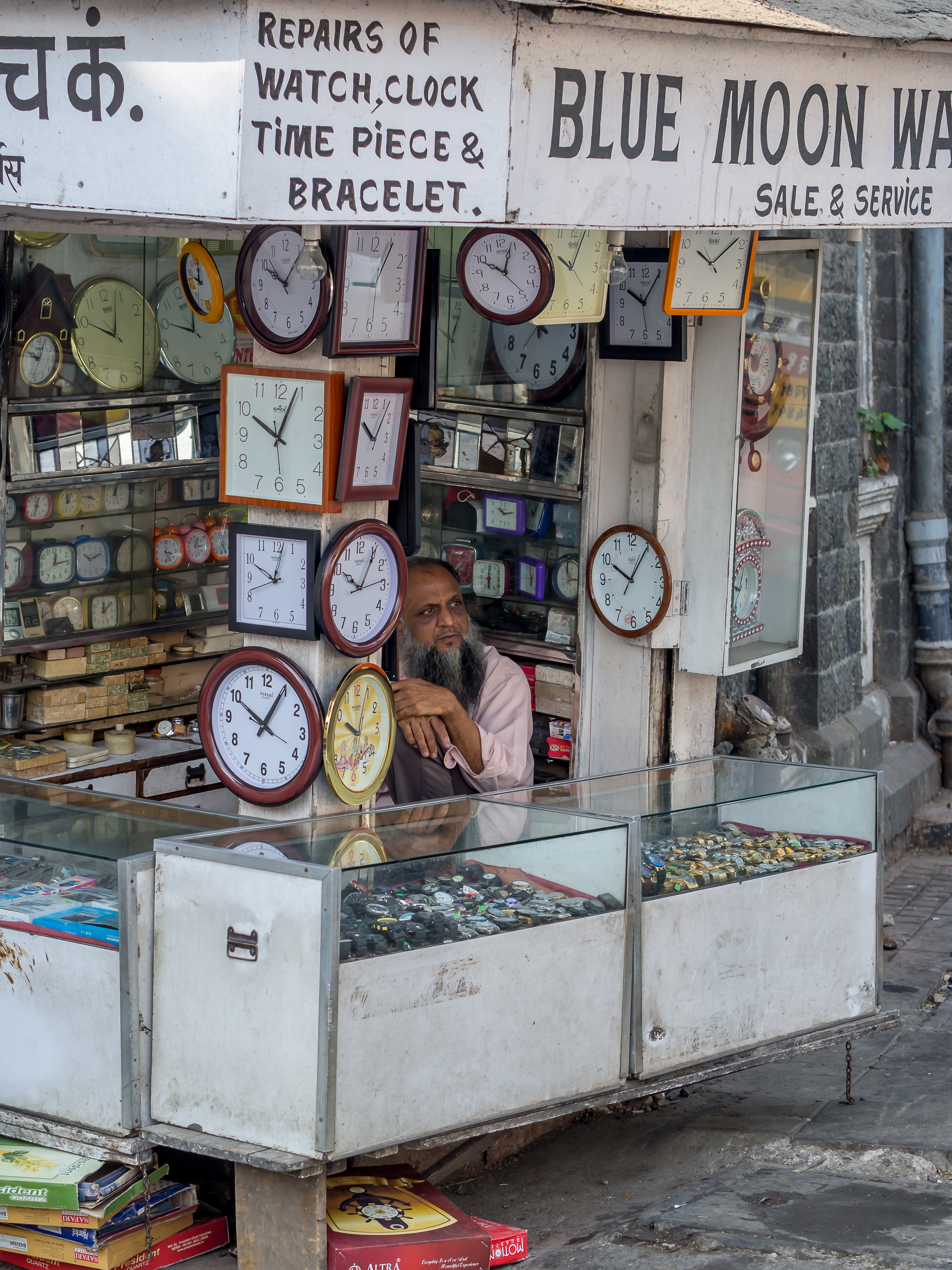
photo 2.jpg

Aiman has recently returned from fieldwork in India for his dissertation, “The Elusive Community: The Making and Unmaking of Muslim Minority Voices in Mumbai, India: An Ethnographic Account.” The second place photo was taken in Mumbai.

Who – The owner and his watch shop     What – Waiting for customers   When – 24 December 2016    Where – Opposite the bustling CST terminus (formerly Victoria Terminus) a World Heritage site and tourist hotspot, Mumbai, India

The picture captures a moment in this watch shop owner’s tiring wait for customers amidst the bustling environs of the World Heritage site. With the availability of cheap mobile phones mostly made in China most people have stopped using watches and clocks to keep time and small businesses such as this one are struggling to stay afloat.


Third Prize: Sarah Whitaker
Salar de Uyuni 200 dpi.jpg

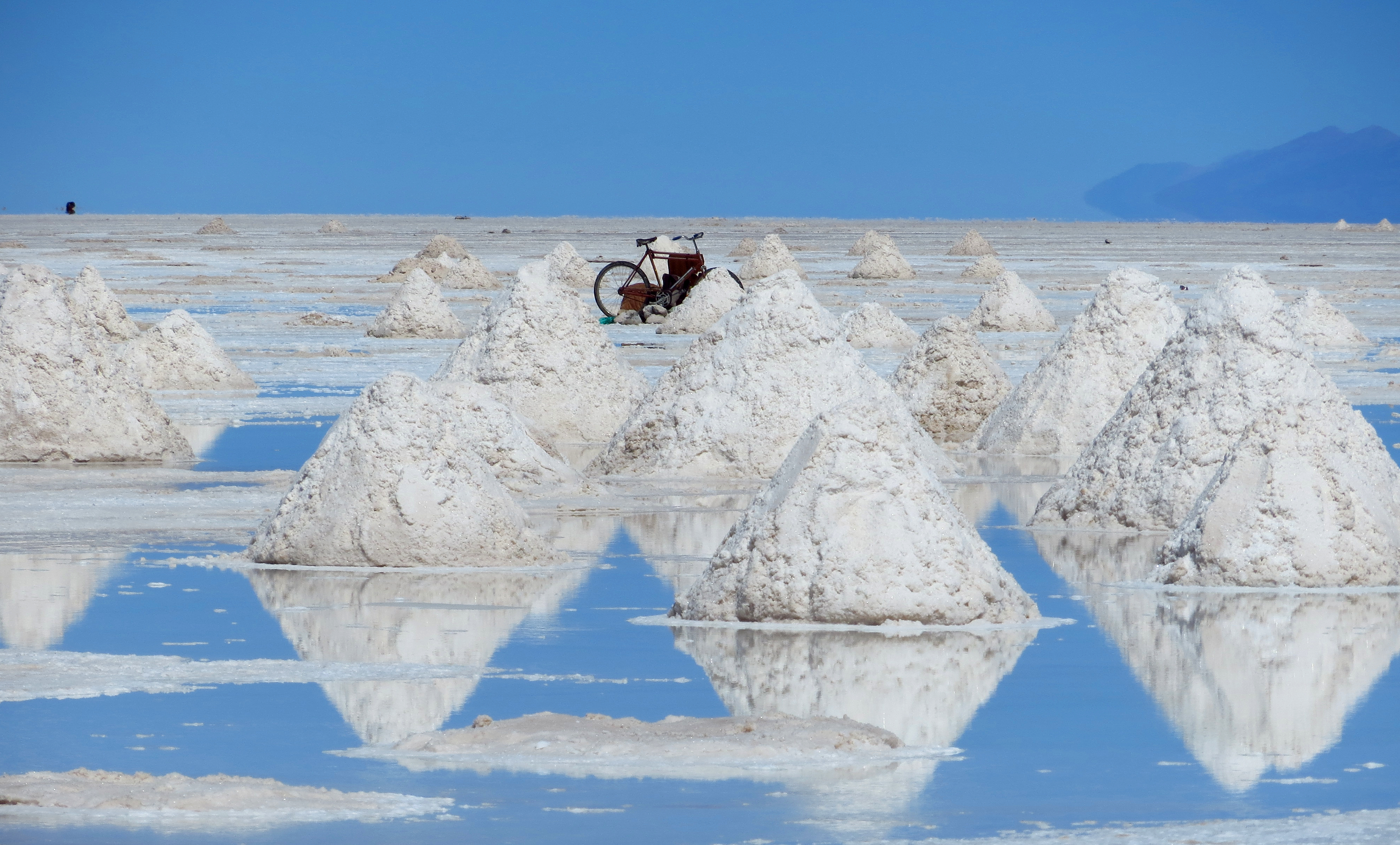
Sarah is currently conducting fieldwork in the Italian Alps for her dissertation, “Climate Change and Well-being in the Italian Alps.” Her third prize photo similarly displays her interests in climate and human interactions with the environment.


The photo captures a bike in the middle of the 4000 square mile Salar de Uyuni in Bolivia, the largest salt flat in the world. The photo suggests the presence and activity of humans in an otherwise empty and seemingly inhospitable landscape. People from nearby towns arrive by bike, foot, or truck to harvest the salt, which they collect into small piles and then transport out of the flats. The Salar is an important international source of salt and the mineral lithium, used to treat bipolar and to make electric car batteries, smartphones, and fertilizers. Bolivian president Evo Morales has promised to develop the extraction of minerals from the flats to meet worldwide demand. While increased extraction would bring more jobs and much needed economic growth to the area around the Salar, local residents worry about the environmental impact and the impact on tourism. The flats are a major tourist destination, a stop on the “gringo trail” through South America. The future of the flats remains uncertain as international, national, and local political, social, and economic interests and opinions continue to clash, some people wanting to push forward, others not wanting the Salar to change. In the meantime, local residents continue to ride their bikes into the flats, harvest its salt and show tourists its beauty, and make a living off a harsh landscape that has remained unchanged for centuries.


People’s Choice: Kaitlin Banfill

Kaitlin is currently conducting fieldwork in China, for her dissertation, “Clans and Classmates: Kinship, Migration, and Education in Southwest China.” Her photo was chosen by those who visited the exhibit and voted for their favorite.
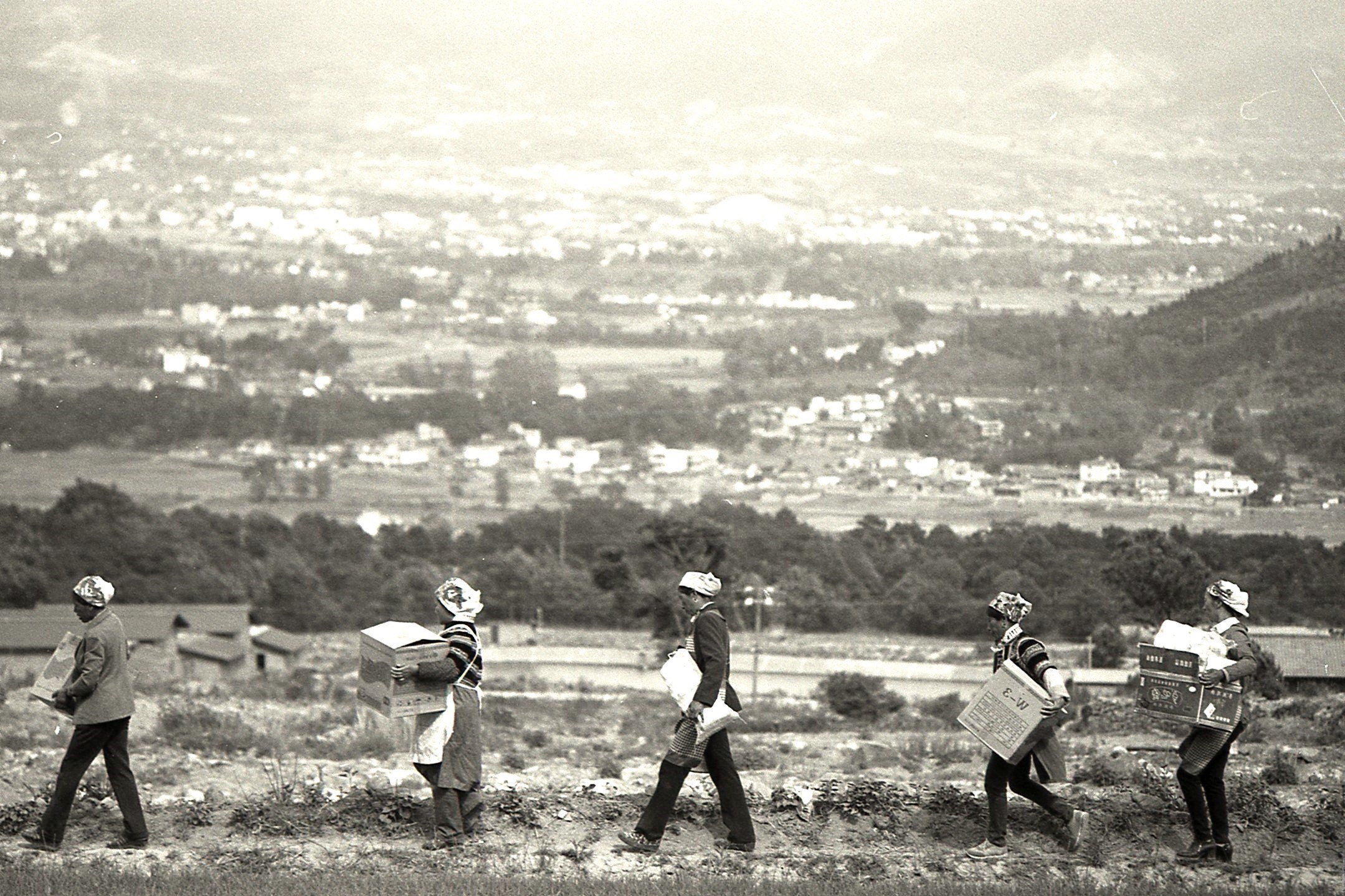
KB1.jpgSichuan Province, China , 35mm black and white film

A Nuosu funeral in Dechang County. In Nuosu culture, funerals are more important than births or weddings, and they bring relatives and community members together. In this photo, women prepare fireworks to guide the funeral procession and the deceased’s soul down the “road of spirits.” This photo is “anthropological” because it shows the relationships between the living and the dead, who continue to live through constant cultivation and reinvention of the community.

Thank you to everybody who participated!